All Topics
Messages
- Details
- Written by: Messenger
- Category: Messages
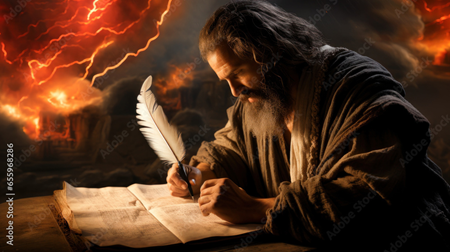
As John recorded these visions, they were given for our awareness and our benefit. His revelations are not to be taken lightly. I must emphasize again that they serve as warnings. Although some of the events he described have already unfolded throughout history, parts of these visions are still awaiting fulfillment and will occur in God’s appointed time.
This leads to a crucial question: when these things come to pass, are you truly ready? Jesus is asking you this.
This question brings to mind the moment during the Last Supper when Jesus, troubled in His spirit, said, “Truly, truly, I say to you, one of you will betray me.” Peter, unsettled and confused, asked, “Lord, where are you going?” Jesus told him that he could not follow yet, though he would follow later. Still, Peter insisted, “Lord, why can’t I follow you now? I will lay down my life for you.” Jesus responded, “Will you really lay down your life for me? Before the rooster crows, you will deny me three times.” (John 13:21).
Peter’s reaction reflects how easily any of us might respond under pressure. We may think we are strong, but when fear confronts us, that is, whether the threat of a sword or the sight of flames, we may be tempted to run, to deny our faith, or to abandon our devotion to Christ. And just as some reject Judas Iscariot, a person can become like him: someone who betrays fellow believers when the pressure rises. Much depends on the motives, desires, and priorities of the heart. If, like Judas, a person values money or worldly gain more than Jesus, the temptation to betray becomes far greater.
This is why Jesus warned, “Watch and pray so that you will not fall into temptation. The spirit is willing, but the flesh is weak.” (Matthew 26:41.
Now, you better know this, that in the vision of John, the fulfillment of the rest of the events in today’s last days, it will use technology. So, this is important to note, too. The rise of modern inventions, such as cars, airplanes, machinery, the internet, satellites, rockets, and the rapid acceleration of technology, is all woven into the prophetic timeline. Nothing that exists today lies outside what God foresaw. Even the internet and artificial intelligence, though impressive, will ultimately be used by the enemy in the fearful events that are coming.
God has seen the destiny of every individual, yet this does not mean predestination in the way some believe. No. God has given each of us absolute freedom of choice. However, He knows the tendencies of every heart. Consider Judas Iscariot, one of the twelve disciples. Why did God choose him? Because God saw his potential for good, yet also his inclination toward evil. Judas was given a chance, just like everyone else.
This teaches us that even those anointed by God still possess the ability to turn away from Him and choose evil. That is the most dangerous reality. Judas participated in all the ministries alongside the other disciples, yet he allowed his sinful desires to dominate him. In the end, he chose to betray Jesus for thirty pieces of silver, revealing the greed that had taken root in his heart.
God allowed this increase of knowledge in these last days because He had already foretold the future. As I have written before, only the Lord can see what lies ahead, for He Himself designs certain events that will unfold. Why, then, has knowledge increased so dramatically? Because God opened the well of understanding as He shortened the days. Jesus said, “If those days were not shortened, no one would be saved.”
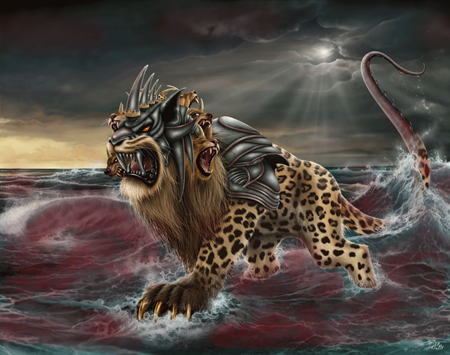
Let’s think and understand deeper the vision again that John saw, he said: The beast I saw resembled a leopard, but had feet like those of a bear and a mouth like that of a lion. The dragon gave the beast his power, his throne, and great authority.”
As I mentioned earlier in the first part and throughout the eight segments on Revelation 12, the religious transformation of the barbarian tribes is significant. Many of these tribes, such as the Goths, Vandals, Franks, and Lombards, eventually adopted Christianity, which played a major role in shaping medieval Europe. Their conversion did not create the Byzantine Empire, nor were they the rulers of it; rather, their Christianization influenced the development of Western Europe and contributed to the rise of new Christian kingdoms.
The Byzantine Empire—heir to the Eastern Roman Empire—did not arise from the barbarian nations, but stood as the direct continuation of Rome after the fall of the Western Empire in 476 AD. Established in the sacred city of Constantinople, it preserved the venerable institutions of Rome and the wisdom of earlier civilizations. Roman law, Hellenic culture, and the enduring light of Eastern Orthodox Christianity shaped its identity. Its governance was marked by a strong central authority and a profound intellectual and spiritual heritage rooted in the Greek tradition.
As the surrounding barbarian tribes gradually adopted the ways of civilization and embraced the Christian faith, their chieftains transformed into monarchs—kings, queens, princes, dukes, and other nobles who would go on to rule the emerging realms of Europe. Yet even as these Christian kingdoms were taking shape, the Byzantine Empire was slowly weakening from within. Internal rivalries, dynastic struggles, and the immense burden of defending an ancient and sprawling empire left it increasingly vulnerable.
Over the centuries, constant military pressure, economic strain, political instability, and the relentless advance of the Ottoman Turks steadily eroded Byzantium’s strength. All these forces ultimately converged in the decisive year 1453, when Constantinople fell to the Ottomans, bringing the long and storied Byzantine Empire to its final end.
I will discuss this in greater detail in my fourth segment.
During these centuries of transformation, the Christian world in the West also underwent profound change. As the political landscape shifted and the old imperial structures weakened, the bishops of Rome gradually emerged as central figures of spiritual authority. The pope—well educated, steeped in Scripture, and entrusted with pastoral leadership—came to be regarded as the head of the Western Church. In the earlier centuries, however, the pope lived within the world of the Byzantine (Eastern) Empire and, like other bishops, was confirmed in his office by the Byzantine emperor. This reflected the ancient unity of the Christian world before the growing separation between East and West.
By the 8th century, the imperial presence in Italy, centered in the Exarchate of Ravenna, was collapsing. The empire, pressed hard by the rise of Islam and preoccupied with defending its eastern frontiers, could no longer protect its Italian territories from the Lombards, who had entered Italy in 568. As imperial influence waned, the bishop of Rome increasingly assumed both spiritual and temporal responsibilities, becoming a stabilizing figure for the Christian communities of the West.
By the 9th century, the title “pope” had become firmly associated with the bishop of Rome, who was acknowledged as the leader of the Roman Catholic Church—the largest of the three major branches of Christianity. In earlier centuries, particularly from the 3rd to the 5th, the title had been applied more broadly to bishops and even to priests, serving as a term of affection and honor among the unified Christian community. Within the Eastern Orthodox tradition, the title continues to be used for the patriarch of Alexandria and for certain Orthodox clergy.
The understanding of the pope as a priest also reflects patterns found in the Old Testament, where God Himself established the priesthood. In Exodus, the Lord commands Moses: “Tell all the skilled workers to whom I have given wisdom in such matters that they are to make garments for Aaron, for his consecration, so he may serve me as priest” (Exodus 28:3). This ancient model of divinely appointed spiritual leadership shaped the early Christian view of sacred office and consecrated ministry.
Doctrinally, within the Roman Catholic tradition, the pope—serving as a priest and the spiritual head of the Church, much as pastors guide many Protestant congregations—is regarded as the successor of St. Peter. Peter, one of the twelve disciples, was appointed by Jesus to shepherd the early Church. Jesus first bestowed upon him a new name, saying, “You are Simon son of John. You will be called Cephas” (which, when translated, is Peter) (John 1:42). Throughout the New Testament, Peter is consistently depicted with images of leadership, authority, and pastoral responsibility among the Apostles.
This calling was further affirmed when Jesus asked His disciples, “Who do people say the Son of Man is?” Peter alone responded, “You are the Messiah, the Son of the living God.” Jesus then declared, “Blessed are you, Simon son of Jonah, for this was not revealed to you by flesh and blood, but by my Father in heaven. And I tell you that you are Peter, and on this rock I will build my church, and the gates of Hades will not overcome it. I will give you the keys of the kingdom of heaven; whatever you bind on earth will be bound in heaven, and whatever you loose on earth will be loosed in heaven” (Matthew 16:18–19).
As bishop of Rome, the pope is therefore understood to possess full and supreme jurisdiction over the universal Church in matters of faith, morals, discipline, and governance. The doctrine of papal primacy rests upon two enduring spiritual foundations: the scriptural role of St. Peter and the historical significance of the Roman Church, long honored as the center of the ancient empire and the sacred site of the martyrdom of both Peter and Paul.
Yet several historians remind us that within the Byzantine world, the pope, despite his spiritual stature, remained, in political terms, a subject of the emperor, and his confirmation, like that of all bishops, required imperial sanction. This dual reality reveals the intricate interplay between heavenly authority and earthly power during the medieval era, a time when Christianity profoundly shaped the course of rising nations and unfolding empires.
As mentioned earlier, the rise of the Ottoman Empire cannot be separated from the emergence of Islam in the 7th century. According to Islamic tradition, a man named Muhammad, born in the Arabian Peninsula and known in his youth as a shepherd and later a merchant, reported receiving revelations from a heavenly messenger. These experiences, which he and his earliest followers believed to be divine in origin, were eventually written down and formed the foundation of the Islamic faith. Many in the region embraced his message, and the new religion spread rapidly across the Middle East.
From a Christian perspective, questions naturally arise regarding the spiritual source of these revelations. When I read portions of Islamic writings shared by a friend, I encountered passages describing an angelic being who claimed great brightness and exalted status. This prompted me to reflect on Scripture, particularly the biblical descriptions of a once-radiant angel who fell from heaven. Revelation 12, along with other passages, invites believers to discern the nature of spiritual influences and to weigh all claims against the testimony of Scripture.
The faith that developed around Muhammad’s teachings eventually shaped the worldview of the Ottoman Turks. Guided by their Islamic beliefs, they expanded their dominion across the Middle East, North Africa, parts of Europe, and regions of Asia. Through their conquests, Islam spread widely across these lands. Yet the rise and fall of earthly empires, whether Byzantine or Ottoman, remains only one strand in the vast and mysterious tapestry of divine providence, in which God’s purposes unfold across the ages.
Thus, the vision granted to John in Revelation 13 does not center on the rise of any single earthly kingdom—such as the Ottoman Empire—but rather on the appearance of a symbolic authority empowered by the adversary. It serves as a solemn reminder that spiritual forces operate beyond the visible movements of nations. The passage calls believers to discernment, steadfastness, and unwavering trust in God’s sovereign rule over history.
As previously explained, John describes the heads and crowns of the beast—ten becoming seven after three had fallen—symbolic imagery that carries deep prophetic meaning. He writes: “The beast I saw resembled a leopard, but had feet like those of a bear and a mouth like that of a lion. The dragon gave the beast his power and his throne and great authority. One of the heads of the beast seemed to have had a fatal wound, but the fatal wound had been healed. The whole world was filled with wonder and followed the beast. People worshiped the dragon because he had given authority to the beast, and they also worshiped the beast and asked, ‘Who is like the beast? Who can wage war against it?’”
This portion of John’s vision is crucial to understand, for certain elements of it have already unfolded in harmony with earlier prophecy. I discussed these developments in my previous writings on Revelation 12, where the visions are shown to be interconnected and mutually illuminating. I encourage you to read them so you may grasp how God reveals His mysteries. In the same way, John’s prophecy in Revelation 13 reaches forward into the future, pointing toward events that continue into the last days—the very age in which we now live. How much of this unfolding each person witnesses depend partly on the length of one’s life and partly on the providential circumstances through which God carries each individual.
Prior to the fall of the Byzantine Empire, another major power was rising in the West—a development many interpret as corresponding to part of the vision in Revelation 13. I will explain the connection between this rapidly emerging empire and the prophecy in a separate segment. The collapse of the Byzantine Empire, followed by the swift expansion of the Ottoman Empire across Byzantium, parts of Europe (such as Bosnia, Serbia, and Spain), the entire Middle East, and much of Asia, is understood—as God revealed it—as part of the symbolic emergence of the beast with multiple heads, ten horns, and ten crowns. The fall of three horns and the rise of the “little horn” from the sea represent the rise of various powers, the overthrow of three barbarian kingdoms, and the transformation of those kingdoms into royal authorities—symbolized by the crowns. I will explain this more fully in the fourth segment.
These elements—the multiple heads, the ten horns, the fallen horns, and the blasphemous little horn—are understood as interconnected symbols representing the rise of various empires. Within this interpretation, the Holy Roman Empire is viewed as a significant part of the composite symbolic beast that emerged from the sea, the very one to whom the dragon granted authority. The rapid rise of the Holy Roman Empire, occurring even as the Byzantine Empire was steadily declining, remains deeply relevant and carries important implications for global events unfolding in these last days.
The Holy Roman Empire began to take firm shape in Western Europe when Charlemagne was crowned emperor by Pope Leo III in 800 AD. Unlike the highly centralized Byzantine Empire, the Holy Roman Empire functioned as a loose and decentralized confederation of territories ruled by kings, princes, and bishops. Its identity was deeply rooted in Roman Catholic tradition and reflected a distinctive blend of Germanic and Latin cultural influences.
Although both the Byzantine Empire and the Holy Roman Empire claimed continuity with ancient Rome and shared a Christian foundation, their paths diverged sharply. The Byzantine Empire represented the Greek-speaking, Orthodox Christian East, while the Holy Roman Empire embodied the Latin-speaking, Catholic Christian West. These differences in language, theology, governance, and culture produced two distinct legacies that profoundly shaped the course of European history.
This has now grown quite extensive. I will continue with the 4th segment next.
- Details
- Written by: Messenger
- Category: Messages
Let us continue with the second part. In the first part, I explained the meaning of the vision without going into full detail. I did this intentionally, so the foundation would be clear before we go deeper. This vision is not something to read lightly or interpret carelessly. Many false prophets and hired preachers have attempted to explain it, but their interpretations have been misleading. The understanding I share comes from God through the Holy Spirit, not from my own knowledge. What do I know on my own? Nothing. Everything I write is based on the insight God has given.
As I have said in my other writings, I did not appoint myself as a messenger, nor did I choose this task for personal gain. Why would I? It would not trouble me if, at this moment, only I, my family, and a few close friends were the ones who entered heaven. But does that make me selfish? In God’s sight, yes—if I were to keep the truth to myself. That is why He chose me to share it. Whether people listen, read, hear, or believe what I write is not my burden to carry. My responsibility is simply to speak what God has instructed me to speak.
I would never declare myself a messenger unless God had truly sent me. That is the work of false prophets, as the Lord warned through the prophet Jeremiah: “I did not send these prophets, yet they have run with their message; I did not speak to them, yet they have prophesied. … Am I only a God nearby,” declares the Lord, “and not a God far away? Who can hide in secret places so that I cannot see them?” declares the Lord. “Do not I fill heaven and earth?” declares the Lord. God Himself would judge me if I were a false prophet.
He knows my heart, just as He knows the hearts of all people. He alone determines who is worthy to be His prophets and messengers. As the Lord Almighty declares: “Whoever touches you touches the apple of His eye” (Zechariah 2:8).
Consider Moses. He fled Egypt in fear after killing an Egyptian who had mistreated an Israelite. Yet God still chose him. Scripture says that God “found him in a desert land, in the howling waste of the wilderness; He encircled him, cared for him, and kept him as the apple of His eye. (Deuteronomy 32:10).After forty years of hardship in the desert, years in which Moses felt forgotten and expected to die in obscurity, God raised him as a leader.
Apostle Paul wrote that God does not show favoritism (Romans 2:11), and that is true. Yet Scripture also shows that God grants special favor to certain individuals, those He calls the “apple of His eye,” as King David prayed in Psalm 17:8: “Keep me as the apple of Your eye.” God chooses the right people for His purposes, just as Jesus chose twelve disciples to represent the twelve tribes of Israel. Those whom God selects are entrusted with His messages.
But being chosen does not mean living in luxury, free from hardship, or treated like royalty. Far from it. Those chosen often endure severe and bitter trials. John, who wrote the book of Revelation, was exiled to the rocky island of Patmos. The Romans left him there, expecting him to die slowly, from hunger, thirst, exposure, or even from wild animals. This is the cost many of God’s messengers have faced.
So, I repeat: it is God who freely chooses His prophets and messengers. To be chosen is a privilege and an honor, to be considered the apple of God’s eye.
Now, let us move into the mysteries of John’s visions, as God reveals them. I do not know these things by myself; only God reveals them to me. Many hired preachers and priests create their own interpretations to please crowds or maintain their positions. I do not condemn them; they are hired workers, and I understand their situation. But giving people false interpretations is dangerous, and God will hold them accountable. He wants the truth, without sugarcoating, without deception. Deception is Satan’s work; it originates from him.
Understand this well: salvation is personal. I pray for my family and friends, but I cannot save them, nor can they save me. Only God can.
Now, let us examine John’s vision of the beast rising from the sea. The dragon stood on the shore because Satan cannot create and does not know the future. Only God creates and ordains what is to come. The shore represents the multitudes of nations and peoples. The rising of the beast represents the unfolding of a major event. The beast symbolizes an earthly authority. Its strange combination of animal features represents a blend of strength, bloodshed, speed, fierceness, and even moments of mercy.
Here is the description: a beast with ten horns and seven heads, with ten crowns upon its horns. I have written extensively about this in eight separate segments, interpretations of the seven heads and the ten crowns, which share the same symbolic meaning. You may become confused if you skip those sections, so I encourage you to read them carefully. And before you do, pray. These messages are not ordinary writings like the works of popular authors seeking profit. They are sacred, for they concern what God has revealed. These visions are not to be read casually, like a comic book or a history text that can be set aside afterward. Your salvation is connected to understanding these truths. Approach them with sincere prayer before you begin.
Who is this beast that represents an earthly authority, you may ask? This is essential to understand, because the event John described has already unfolded in part and will continue to develop in these last days. John wrote, “The beast I saw resembled a leopard, but had feet like those of a bear and a mouth like that of a lion. The dragon gave the beast his power, his throne, and great authority.” You must grasp this section carefully, for it is here that the future of Christianity hangs in the balance and where the great divide begins. This vision points to a major and critical period in history—the era surrounding the Great Reformation and the Dark Ages—when the persecution of true Christian believers intensified. Many consider this the most severe persecution ever carried out against genuine followers of Christ. The vision shows the dragon granting authority to the beast, meaning Satan empowered this earthly power to commit such terrible acts against God’s faithful people.
This historical development took shape after the conversion of Constantine I, the Roman emperor of the Eastern Roman Empire, during a time when the Western Roman Empire collapsed under the advance of various barbarian tribes. As these tribes embraced Christianity, they were gradually transformed. The ten crowns symbolize the monarchies and royal powers that emerged among them, while the seven heads represent the major barbarian groups that became Christianized and eventually formed the foundations of Europe as a civilized continent.
These seven groups—the Heruli, Suevi, Burgundians, Visigoths, Lombards, Franks, and Anglo-Saxons—eventually developed into the major nations we recognize today: France, Germany, Spain, Sweden, Italy, England, and Portugal. From these foundational peoples, many smaller kingdoms and territories later emerged, forming the wider collection of European nations that exist today. Their languages share similarities because the smaller nations grew out of these larger established tribes, even though they later separated, especially after their conversion to Christianity and the later pressures brought by the rise of the Ottoman Empire. I will discuss the Ottoman Empire in a separate topic, as that is a different matter altogether.
Now, the central event in this vision is the division that arose within Christianity. After Constantine I converted to the faith, certain church leaders—who later formed what became known as the papacy—entered into a compromise with him in hopes of ending the persecution of believers. As I have explained in other writings, this compromise involved accepting certain pagan practices that Constantine wished to retain. These included adopting the Gregorian calendar, altering appointed times and seasons, using December 25th, originally dedicated to a Roman pagan deity, as the celebration of Christ’s birth, and introducing graven images to represent Jesus, God, and the saints.
This may be difficult for many Christians to accept, but the celebration of Christmas on December 25th is not something God established, for Jesus was not born on that date. I have traveled throughout Israel—Jerusalem, Tel Aviv, the Dead Sea, the Sea of Galilee, and other regions—and the biblical setting of Jesus’ birth does not match a winter season. When Jesus took on human form and chose Mary to bear Him, she gave birth in a manger, in a humble stable, after traveling to Bethlehem for the census ordered by King Herod. Mary was already in her ninth month of pregnancy and did not expect to go into labor that night. The climate during that time was not winter, nor cold, nor snowy.
Because there was no room available, the innkeeper offered them the only place he could—the distant stable where the animals were kept. Joseph and Mary, with no other option, went there, and Mary gave birth in those humble conditions. Though there were no doctors or modern medical professionals, people of that time knew how to assist in childbirth, including cutting the umbilical cord. God had given this wisdom from the very beginning, as He taught Adam and Eve in the Garden of Eden. All true wisdom comes from the Lord
Before Constantine’s conversion, the Roman Empire was deeply rooted in the worship of idols and carved images. After his conversion, he proposed incorporating similar images into Christian worship. The church that emerged from this union became known as the Roman Catholic Church, intended to be the universal church for all Christians.
So, you may disagree with me for saying this, but the truth remains: this celebration was never appointed by Jesus Christ. He never observed December 25th as His birthday, nor did He instruct the use of any graven images. The adoption of these pagan‑influenced customs introduced significant division within the Christian faith. Many believers could not accept practices such as celebrating Jesus’ birth on a date not supported by Scripture, or incorporating graven images—something God clearly forbids in the very first of the Ten Commandments. Rather, concerning graven images, God said::
“You shall have no other gods before Me. You shall not make for yourself an image in the form of anything in heaven above, or on the earth beneath, or in the waters below. You shall not bow down to them or worship them; for I, the Lord your God, am a jealous God, punishing the children for the sin of the parents to the third and fourth generation of those who hate Me, but showing love to a thousand generations of those who love Me and keep My commandments.”
Back to December 25th, Is it wrong to celebrate Christmas? There is nothing wrong with remembering the birth of Jesus and His coming into the world. However, choosing a specific date that originated from the pagan traditions associated with Constantine I’s era raises concerns. We are called to remember Christ’s coming daily, not only on a single occasion.
Another issue is that many people focus more on Christmas trees, shopping, and parties than on Jesus Himself. What should be a solemn commemoration filled with spiritual joy often becomes a celebration centered on worldly distractions. Because December 25th has roots in pagan customs rather than God’s instruction, it is important to examine its foundation carefully.
Regarding man‑made festivals, God declared:
“Your New Moon feasts and your appointed festivals I hate with all My being. They have become a burden to Me; I am weary of bearing them.” (Isaiah 1:14)
God’s message here speaks for itself.
Another truth is that birthday celebrations are not established or blessed by God. In Scripture, birthdays are never portrayed as holy or God-ordained events. Instead, they are linked with sorrow and tragedy. A birthday marks the passing of time, the shortening of life, and the reminder of human mortality under the curse of aging.
This is illustrated in the book of Job. His children held a birthday feast, and during that celebration, disaster struck—they were all killed through the enemy’s actions. Scripture records that Job’s sons “used to hold feasts in their homes on their birthdays, and they would invite their three sisters to eat and drink with them” (Job 1:4). The devil took advantage of this occasion and destroyed them. This is the only explicit birthday celebration mentioned in the Bible, and it ended in tragedy. Nowhere does Scripture indicate that God approves of such celebrations.
These disagreements marked the beginning of a deep and lasting divide among Christians. I will expand on this in the next segment, as the explanation is becoming lengthy. Please continue reading.
- Details
- Written by: Messenger
- Category: Messages
Before Jesus began His ministry, He left His home and family and went into the wilderness for forty days and forty nights. As I mentioned in a previous topic, this was His time of preparation before taking on the noble work the Father had given Him. He had not yet performed a single miracle, preached to the crowds, or called His disciples. Instead, He withdrew to commune with the Father. Scripture does not reveal every detail of their divine interaction, but Jesus shared enough with His disciples for this moment to be recorded—so that we would understand the importance of seeking God before stepping into our own calling.
Led by the Spirit, Jesus entered the wilderness in complete isolation, where He fasted for forty days and forty nights. It is worth repeating this because it helps us grasp the weight of what happened next: Jesus was physically weak, hungry, and vulnerable. And it was precisely in that moment that the enemy came, boldly, shamelessly, and without hesitation, attempting to strike when Jesus appeared most fragile. Yet even in hunger, exhaustion, and solitude, Jesus stood firm. Though He had stepped down from His heavenly throne and taken on human flesh, He resisted every temptation with the power of God’s Word. And when Satan realized he could not break Him, he fled.
As for me, I am simply a humble messenger. I did not seek this role, nor did I ask to be appointed. God anointed me to share His words and to reveal what He has shown me about the future. And as I speak about these things, I must also remind everyone of a truth we cannot ignore: temptation is real, the enemy is real, and spiritual warfare is a daily reality for every believer. Satan and his fallen angels are spiritual beings who influence, tempt, and deceive—and if a person is spiritually unguarded, they can gain control over the heart and mind.
Just as Satan approached Jesus without shame, he will also tempt any Christian believer today. Jesus warned that when a person is not spiritually alert or connected to God, the enemy can gain influence over their life. He illustrated this danger by describing an unclean spirit that returns to a person and finds “the house empty, swept, and put in order,” only to bring “seven other spirits more evil than itself,” leaving the person in a worse condition than before (Matthew 12:43–45). In this teaching, Jesus emphasized the peril of a life that is spiritually empty—cleaned up outwardly but unguarded inwardly. An “empty house” represents a heart without a relationship with God, without spiritual protection, and without the presence of the Holy Spirit. When the soul is vacant, the enemy sees an open opportunity. He returns with greater force, bringing influences more destructive than before. A life without God is like a house with open doors and unguarded windows: it may appear orderly on the outside, but it is vulnerable to invasion. A soul disconnected from God becomes easy prey for spiritual attack. The enemy looks for emptiness. He looks for weakness. He looks for hearts that are spiritually dry, distracted, or isolated.
This is why I say with confidence that this website belongs to God. Who financed it? No one but Him. My parents did not provide the money for this project. They are believers, but they do not spend on something like this unless they are certain God has asked for it. When I told them that God had instructed me to do this, they agreed—but offered no financial support. They simply said, “God will provide.” And God has been providing, miraculously. I do not receive donations, nor do I ask for them. God is providing.
I believe God set me apart from the time I was a baby—much like the prophet Jeremiah, to whom God said, “Before you were born, I already knew you and had chosen you.” Throughout my life, I have shared with my family the dreams God has given me about major events: global crises such as the spread of disease (pandemic), international conflicts including tensions in the Middle East, US political changes, and natural disasters like earthquakes and tsunamis. Some of these dreams also carried warnings about violent incidents (in the US), though at the time I was too afraid to speak openly about them. In a separate message, I will share what I believe God has revealed to me about the future through these dreams.
No one is exempt from trials or temptations; every believer will face them. Satan and the fallen angels are real, and their influence is real. When a person lacks connection with God or rejects Him entirely, it becomes easy for the enemy to influence their thoughts, emotions, and decisions. Because they are spiritual beings with spiritual power, they seek to control the human mind and soul, leading people into darkness and destructive behavior.
Demonic possession is not a myth. During the earthly ministry of Jesus, many individuals, both young and old, were tormented or oppressed by unclean spirits. Scripture records these encounters to remind us that spiritual warfare is real and that the enemy actively seeks to harm and deceive. Yet these same accounts also reveal that Jesus holds absolute authority over every demonic force, and those who belong to Him are protected by His power.
From a spiritual perspective, many believers, including myself, recognize that the enemy often targets the mind, seeking to influence thoughts, emotions, and inner peace. When I was in my early teens, God gave me a dream that revealed just how vulnerable a person becomes when their heart drifts far from Him. In the dream, I saw what happens when the soul grows empty and heavy — when it feels disconnected from the Holy Spirit and stripped of the spiritual protection we often take for granted. In that dream, I saw how the enemy tries to invade the mind of someone who is spiritually unanchored. It appeared like a dark smoke entering an individual, altering their demeanor and spirit. That experience deeply shaped my understanding of the importance of staying close to God, remaining filled with His presence, and relying on His protection.
Yet even in the midst of these warnings, we are reminded of the hope proclaimed by countless preachers—the timeless truth recorded by the apostle John: “For God so loved the world that He gave His only begotten Son, that whoever believes in Him will not perish.”
After overcoming the temptation in the wilderness, Jesus went to John and was baptized. Although He is God and without sin, He willingly submitted to baptism to show all humanity the significance of this sacred act. As soon as Jesus came up out of the water, the heavens opened, and the Spirit of God descended upon Him like a dove. In that holy moment, the Father’s voice declared from heaven, “This is My Son, whom I love; with Him I am well pleased.” This divine affirmation reveals unmistakably that Jesus is the Son of God—not merely a prophet, as some claim (Matthew 3:16–17).
Baptism symbolizes renewal — a true spiritual rebirth. It marks a turning away from sinful thoughts, behaviors, and patterns and stepping into a transformed life. When we accept Jesus and follow Him in this act of obedience, we are set apart for God. The Holy Spirit begins to dwell within us, and God appoints His angels to watch over us.
Immersion in the water represents the burial of all ungodly ways — the death and washing away of everything that once separated us from God. Rising from the water signifies cleansing, restoration, and the beginning of a new life. With this new identity, real change is expected: if you once stole, you stop stealing; if you lied, you stop lying; you stop insulting others, abandon foul language, turn away from sexual immorality, reject deviant behaviors, honor your parents, and stop cheating. These examples illustrate the transformation baptism calls us into.
For this reason, baptism by immersion carries deep spiritual significance and should not be taken lightly. It is a holy commitment of one’s life to God. Some believers choose to undergo a second baptism, and whether this is acceptable is ultimately known only to God. From my personal perspective, if a Christian has backslidden, the proper response is sincere repentance—not another baptism. Just as Jesus will not come down from heaven to be crucified a second time, we do not need to repeat what has already been completed in our spiritual rebirth.
Do people truly listen, or do they simply hear the words without taking them to heart? Many profess to be believers and call themselves Christians, yet when trials arise, their faith shrinks. They hide, they retreat, and they flee in fear. This brings us back to a parable I shared months ago—the Parable of the Sower. I want to revisit it now, along with Jesus’ own explanation, so each of us can honestly discern where we stand as believers.
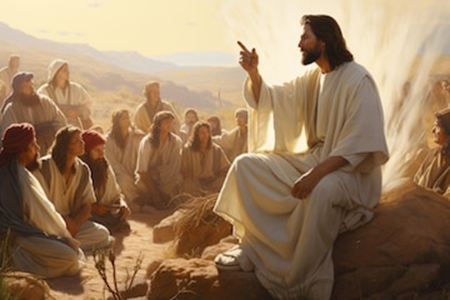
Jesus said: “A farmer went out to sow his seed. As he scattered the seed, some fell along the path, and the birds came and ate it up. Some fell on rocky places, where it did not have much soil. It sprang up quickly because the soil was shallow. But when the sun came up, the plants were scorched, and they withered because they had no root. Other seed fell among thorns, which grew up and choked the plants. Still other seed fell on good soil, where it produced a crop—a hundred, sixty, or thirty times what was sown.”
This is the meaning of the parable: the seed represents the Word of God. Jesus explained this plainly so we would understand. He said, “The seeds that fell along the path are those who hear the message, but the devil comes and snatches it from their hearts so they cannot believe and be saved. The seeds that fell on rocky ground are those who hear the word and receive it with joy, but it never takes root; they believe for a time, but when testing comes, they fall away. The seeds that fell among the thorns are those who hear, but the worries, riches, and pleasures of this life crowd in and choke the word, and it bears no mature fruit. But the seeds that fell on good soil are those who hear the message, hold it with a good and obedient heart, and persevere until they produce fruit.”
But Jesus shows us the path to victory. He did not overcome Satan because He was physically strong—He was physically weak. He overcame because He was spiritually full. Full of the Word. Full of obedience. Full of the Spirit. Full of the presence of His Father. And this same strength is available to us today. When we stay connected to God, through prayer, Scripture, worship, and obedience, we become fortified from within. We are no longer empty houses but temples filled with the Holy Spirit. Darkness cannot occupy a place where the light of God dwells. Temptation loses its power when our hearts are anchored in Christ. The enemy may come, but he cannot stay. This is why our spiritual connection to God is not optional—it is essential. Without Him, we are vulnerable. With Him, we are unshakable.
Jesus’ explanation is simple and clear, yet as a young person, I often struggled to understand it. Over time, through the dreams God gave me, He taught me many things and helped me apply them in my own life. I share these experiences now because I believe God has called me to do so. If He had not chosen me for this purpose, I would have no reason to write here or speak about truth and prophecy—especially without any salary or support. I am still a student with basic needs, yet God placed a calling on my life, directing me to build this website to preach the gospel and reveal what He has shown me. I will remain hidden, because this is God’s plan and purpose. He must be exalted, not me.
Do I want to be a hired preacher? No. I am simply a messenger, and I will remain as I am unless God instructs me otherwise. God speaks to me, and I cherish the privilege of being His messenger. My trials may be bitter, but His anointing is more than I could ever ask for. How blessed you are to be called a disciple of Jesus. Remember the twelve disciples—they traveled from village to village, preaching the gospel, healing the sick, and delivering the oppressed without receiving any salary, yet their joy was complete. God’s eternal, ever-renewing life is a gift beyond anything words can describe.
This website belongs to God. Who financed it? No one but Him. It is dedicated to God and stands as His final call to all people of the world. I have traveled across the globe with my family—from Europe to Asia, the Middle East, and throughout the United States—but my parents, though believers, did not fund this spiritual project. They do not invest in something like this unless they are absolutely certain God has commanded it. Growing up, I simply followed them with my siblings wherever they went, never imagining that one day God would call me to build something like this. Their response to my calling was the same as always: “God will provide.” And He has—miraculously. I do not receive donations, nor do I ask for them. God Himself is providing. This is what you would call God’s omnipotence, for His website continues to stand through storms, trials, whatever you name.
Some may wonder whether prophets still exist today. In these last days, I believe there are no longer prophets in the traditional sense. The last one I personally acknowledge is Ellen G. White, an American woman whom God used in a remarkable way. I honor her for the books she wrote and the visions she shared. I have read two of her books, and I found myself in full agreement with her messages. I first learned about her through a friend who introduced me to her writings and lent me the books.
Sadly, many of her own followers later dismissed her, and some even twisted her writings to support false interpretations. But God knows her heart—she did not write for money, nor did she establish a religious movement for personal gain. Regardless of how others treated her, she has a secure place in heaven.
So today, let this truth sink deeply into your heart: the same Jesus who overcame in the wilderness will live in you—if you allow Him to. The Holy Spirit will enter and dwell within you when you respond to Jesus’ call, His final call in these last days. Yes, we are in the last days, just as Jesus said. Can you not see it? Time is racing forward; before we know it, another year arrives. Each day, someone dies, and their fate is sealed, and each day a new baby is born, stepping into the arena of faith and struggle. This cycle will continue until Jesus returns. I will not speak of an exact year, for in Heaven there is no time—only eternity. His strength becomes your strength. His victory becomes your victory. And when you stand in His power, Satan has no choice but to flee.