Read them daily, for they are your spiritual nourishment. Just as the body needs physical food to grow strong and stay healthy, your soul craves the wisdom, truth, and guidance that come from God’s Word. Scripture is not meant to be read occasionally or merely admired—it is to be taken in regularly, feeding your spirit with life, clarity, and strength.
Each verse offers insight, each promise revives hope, and each command draws you closer to the heart of the Divine. When you make reading God’s Word a daily habit, you’ll find your perspective shifting, your faith deepening, and your path made clearer—even in times of confusion.
Let the Word dwell richly in you, for in it is the nourishment that sustains eternal life.
“A man had a fig tree growing in his vineyard, and he went to look for fruit on it but did not find any.So he said to the man who took care of the vineyard,
‘For three years now I’ve been coming to look for fruit on this fig tree and haven’t found any.Cut it down!Why should it use up the soil?’
‘Sir,’ the man replied, ‘leave it alone for one more year, and I’ll dig around it and fertilize it.If it bears fruit next year, fine!If not, then cut it down!’”
Jesus told His disciples a parable to show them that they should always pray and not give up.He said:
“In a certain town there was a judge who neither feared God nor cared what people thought.And there was a widow in that town who kept coming to him with the plea,
‘Grant me justice against my adversary.’
For some time he refused.But finally he said to himself,
‘Even thought I don’t fear God or care what people think, yet because this widow keeps bothering me, I will see that she gets justice, so that she won’t eventually come and attack me!’
And the Lord said,
‘Listen to what the unjust judge says.And will not God bring about justice for His chosen ones, who cry out to Him day and night?Will He keep putting them off?I tell you, He will see that they get justice, and quickly.However, when the Son of Man comes, will He find faith on the earth?’”
We often hear Christians say, “In the beginning, God created the world.” But the exact wording in Scripture is, “In the beginning God created the heavens and the earth.” (Genesis 1:1) I use the phrase Christian believers intentionally, because some people claim the title “Christian” without truly living in faith. For them, it becomes more about church attendance and affiliation than a genuine spiritual relationship with God.
As God formed the earth, the animals, and the trees, humanity was created last. I used to wonder why God chose that order. Then He gave me insight: if man had been created first, he would have opened his eyes to an empty, unfinished world—nothing but darkness and water. Scripture says, “Now the earth was formless and empty, darkness was over the surface of the deep, and the Spirit of God was hovering over the waters.”(Genesis 1:2) Humanity would have missed the beauty of creation unfolding.
Adam and Eve, however, were created fully formed—pure, blameless, and already mature, made in the very image of God. Scripture records God saying, “Let us make mankind in our image, in our likeness, so that they may rule over the fish in the sea, the birds in the sky, the livestock, all the wild animals, and every creature that moves along the ground.”(Genesis 1:28)
My cousins used to tease me with the classic question, “Which came first, the chicken or the egg?” It’s a playful riddle people like to toss around. I remember pausing, unsure of the answer, and simply saying, “I don’t know.” They didn’t tell me the answer either.
But the question stayed with me until God gave me insight. In the beginning, God created every creature, such as animals, birds, reptiles, and fish, as fully grown. He blessed them and said, “Be fruitful and increase in number and fill the waters in the seas, and let the birds increase on the earth.”That meant the mother hen came first. Once I understood that, I finally felt confident in my answer.
So, the next time my cousin brought up the same question, he said my team could start first if I got it right. I scratched my head and asked what the question was. Boom—right in front of all our friends, he repeated it: Which came first, the egg or the chicken?This time I didn’t hesitate. Grinning, I said, “You’re such a chicken. The chicken came first!”
He stared at me and asked how I knew. I answered, “The egg didn’t just fall from an oak tree. A grown chicken has to exist first before it can lay an egg.” Everyone burst into laughter, and they all agreed with my reasoning. Honestly, none of them were sure of the answer either. It really did sound like a genius response. But the insight came from God as He is omniscient, omnipotent, and all-knowing. I thank Him for giving me that understanding.
A consistent theme throughout Scripture is that God reveals Himself and speaks through those who believe in Him. Nowhere in the biblical record does God anoint a pagan or unbeliever to serve as His prophet or messenger. Instead, He entrusts His word to individuals who acknowledge Him, even when their faith is small or imperfect. Divine calling rests not on human perfection but on willingness, obedience, and reverence for the Lord. For this reason, God may choose even a child when no adult proves faithful or available for His purposes.
This truth becomes especially vivid when we consider God’s omniscience—His perfect knowledge of every thought, intention, and hidden motive. Nothing escapes His sight. The Gospel of Luke provides a striking illustration of this in the account of Jesus healing the paralyzed man (Luke 5:17–26).
The narrative unfolds on a day when Jesus was teaching in a crowded house. Pharisees and teachers of the law had gathered from villages across Galilee, as well as from Judea and Jerusalem, to observe Him. Luke notes that “the power of the Lord was present for Him to heal,” setting the stage for a profound revelation of divine authority.
Amid the crowd, a group of men arrived carrying their paralyzed friend on a mat. Determined to bring him before Jesus, they attempted to enter the house, but the crowd made it impossible. Undeterred, they climbed onto the roof, removed the tiles, and lowered the man directly into the room, placing him at the feet of Jesus. Their boldness and persistence were themselves an expression of deep faith.
Seeing their faith, Jesus declared to the man, “Friend, your sins are forgiven.”This pronouncement immediately stirred silent controversy among the Pharisees and teachers of the law. Within their hearts they reasoned, “Who is this who speaks blasphemy? Who can forgive sins but God alone?”Though they voiced nothing aloud, Jesus perceived their inner thoughts. He confronted them directly, asking, “Why are you thinking these things in your hearts? Which is easier: to say, ‘Your sins are forgiven,’ or to say, ‘Get up and walk’?”
To demonstrate His divine authority, Jesus then turned to the paralyzed man and commanded, “I tell you, get up, take your mat, and go home.”Immediately, the man rose, picked up the mat he had been carried on, and walked out in full view of all, praising God. The crowd was overcome with awe, declaring, “We have seen remarkable things today.”
This episode reveals a profound theological truth: no thought is hidden from God. The Pharisees’ silent objections were fully exposed before Jesus, demonstrating that God sees not only outward actions but the deepest meditations of the human heart.
This principle is further illustrated in the calling of the prophet Samuel. As previously noted, Samuel was only a young child—likely around five years old—when God chose him as His messenger. Scripture emphasizes that, throughout all Israel, God found no one else suitable to receive His word except the boy who ministered faithfully in the temple. Samuel’s youth did not hinder God’s purpose; rather, his openness and purity of heart made him usable when others were not.
Together, these accounts affirm a consistent biblical theme: God sees all, knows all, and appoints His servants according to His sovereign wisdom. It is faith, humility, and the readiness of the heart, not by age, social standing, or human perfection, that determine whom God entrusts with His message.
This truth becomes even clearer when we look more closely at Samuel’s background. His calling cannot be separated from the unwavering faithfulness of his mother, Hannah, who dedicated him wholly to the Lord. For many years, she endured the deep sorrow of barrenness, yet her devotion never wavered. Her story is often overlooked in Christian circles, and her strength—both spiritual and personal—rarely receives the honor it deserves. Yet it was her steadfast faith that opened the way for the anointing of a new prophet in Israel, the youngest ever called by God to speak His truth.
Hannah’s life stands as a powerful example for all of us, whether young and old, men and women alike. Her perseverance in suffering, her humility before God, and her refusal to let despair silence her prayers reveal a model of faith that continues to speak across generations. She returned again and again to the temple, pouring out her heart before the Lord in quiet, tearful supplication, pleading for His mercy. In the depth of her anguish, she made a solemn vow: if God would grant her a son, she would dedicate the child entirely to Him for lifelong service.
In her anguish, she prayed and made a vow: “Lord Almighty, if You will look upon Your servant’s misery and remember me, and give me a son, then I will give him to the Lord all the days of his life, and no razor will ever touch his head.” (1 Samuel 1:11) God heard her prayer, and Hannah remained faithful to her vow. In time, she became pregnant and gave birth to a son. She named him Samuel, saying, “Because I asked the Lord for him.” When Samuel was old enough, she brought him to the temple, with her husband’s full agreement. They visited him each year. As she had promised, she told her husband, “After the boy is weaned, I will take him and present him before the Lord, and he will live there always.”
“Do what seems best to you,” her husband Elkanah told her. “Stay here until you have weaned him; only may the Lord make good his word.” So the woman stayed at home and nursed her son until she had weaned him.
After he was weaned, she took the boy with her, young as he was, along with a three-year-old bull, an ephah of flour, and a skin of wine, and brought him to the house of the Lord at Shiloh. When the bull had been sacrificed, they brought the boy to Eli,and she said to him, “Pardon me, my lord. As surely as you live, I am the woman who stood here beside you, praying to the Lord. I prayed for this child, and the Lord has granted me what I asked of him. So now I give him to the Lord. For his whole life, he will be given over to the Lord.” And he worshiped the Lord there.” (1 Samuel 1:22-28)
A natural question arises when reflecting on Hannah’s example: Are there young women today who embody the same devotion, purity, and spiritual strength that marked the life of Samuel’s mother? Scripture describes Hannah as a young and beautiful woman, yet her beauty was matched—and surpassed—by her sincerity, humility, and truthfulness before the Lord. Her character stands in sharp contrast to many cultural patterns that shape modern life, where outward display is often valued more than inward holiness.
The book of Revelation uses powerful imagery to warn God’s people against the seductions of worldliness. John, the youngest of Jesus’ disciples, was commanded to record a vision of the “great prostitute,” a symbolic figure representing spiritual corruption and the allure of ungodly living. John writes:
“One of the seven angels who had the seven bowls came and said to me, ‘Come, I will show you the punishment of the great prostitute, who sits by many waters. With her, the kings of the earth committed adultery, and the inhabitants of the earth were intoxicated with the wine of her adulteries.’ Then the angel carried me away in the Spirit into a wilderness. There I saw a woman sitting on a scarlet beast covered with blasphemous names and having seven heads and ten horns. The woman was dressed in purple and scarlet, glittering with gold, precious stones, and pearls. She held a golden cup in her hand, filled with abominable things and the filth of her adulteries. The name written on her forehead was a mystery: Babylon the Great, the mother of prostitutes and of the abominations of the earth. I saw that the woman was drunk with the blood of God’s holy people, the blood of those who bore testimony to Jesus. When I saw her, I was greatly astonished.” (Revelation 17:1–6)
This symbolic figure represents a way of life marked by pride, excess, and spiritual unfaithfulness, an image that stands in sharp contrast to the quiet purity and humility embodied by Hannah. She did not seek attention through outward display; rather, her beauty flowed from her devotion to God and the sincerity of her heart.
The Lord addressed this very issue through the prophet Isaiah, condemning the spirit of vanity and self-exaltation that had overtaken the women of Zion. Their outward adornment reflected an inward departure from holiness. As Isaiah records, “The women of Zion are haughty, walking along with outstretched necks, flirting with their eyes, strutting along with swaying hips, with ornaments jingling on their ankles.” (Isaiah 3:16)
This prophetic rebuke is not merely about jewelry or appearance; it exposes a deeper spiritual condition, a heart captivated by pride, worldliness, and self-display rather than by reverence for God. In contrast, Hannah’s life demonstrates that true beauty is found in humility, purity, and a spirit submitted to the Lord.
Reflecting on this contrast brings to mind the biblical call to holiness in every generation. God desires purity not only in outward conduct but also in the heart and in speech. This call shapes how we present ourselves, the values we embrace, and the influences we allow to form our character. Holiness is not a cultural trend but a timeless command, inviting God’s people to live differently from the world and to reflect His character in all things.
I remember my own early fascination with tattoos when I was a child. At eight years old, I would draw on my cheeks and arms with a red marker, thinking it looked interesting. When my father saw it, he gently explained that tattoos were common among prisoners and sailors in his military experience, often used for identification. His words stayed with me, and I lost interest in the idea. Scripture also warns Israel not to imitate the practices of surrounding nations. As the Lord commanded:
“Do not cut your bodies for the dead or put tattoo marks on yourselves. I am the Lord.” (Leviticus 19:28)
The point is not merely about outward markings but about the deeper call to live differently from the world, to pursue holiness, humility, and devotion to God, just as Hannah did. Her life remains a timeless example for all believers, young and old, men and women alike.
I will address the mystery and interpretation of the scarlet woman later, for John’s vision of her is a prophetic revelation connected to a specific future event. Although this theme relates to the material in Revelation 12 and 13, which I discussed earlier, it stands as a distinct subject of its own. What follows, therefore, is a separate examination of the mystery surrounding this scarlet woman and the significance of her appearance in John’s vision.
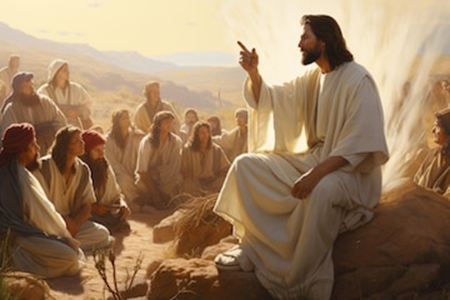
Jesus taught His disciples many lessons, and most of them were delivered through parables—stories with deep spiritual meaning rather than ordinary narratives. One of these parables is the story of the ten virgins:
Jesus said that “the kingdom of heaven will be like ten virgins who took their lamps and went out to meet the bridegroom. Five were wise, and five were foolish. The foolish took their lamps but brought no extra oil, while the wise carried jars of oil along with their lamps. The bridegroom was delayed, and all of them became drowsy and fell asleep. At midnight a cry rang out: ‘Here is the bridegroom! Come out to meet him!’ The virgins awoke and trimmed their lamps. The foolish said to the wise, ‘Give us some of your oil; our lamps are going out.’ But the wise replied, ‘No, there may not be enough for both us and you. Go instead to those who sell oil and buy some for yourselves.’ While they were away buying oil, the bridegroom arrived. Those who were ready went in with him to the wedding banquet, and the door was shut. Later the others returned and cried, ‘Lord, Lord, open the door for us!’ But he answered, ‘Truly, I tell you, I do not know you.’ Therefore, keep watch, for you do not know the day or the hour.”
In this parable, Jesus compares all believers awaiting His second coming to these ten virgins. They are called virgins to symbolize purity, yet only half of them were truly prepared. This represents Christians who claim to belong to God but are not genuinely ready for His kingdom.
The ending of the parable is sobering: the five unprepared virgins called out to enter, but the Lord refused them, saying, “I do not know you.” This reflects the tragic reality for those who are only partially faithful—those who appear devoted outwardly but lack true obedience and readiness.
God makes it clear that there is no middle ground. Jesus told John in Revelation, “Because you are lukewarm—neither hot nor cold—I am about to spit you out of my mouth”(Revelation 3:16). A person cannot remain lukewarm. Each one must choose: to walk in the light of God or to remain in the darkness aligned with Satan.
Today, there are countless religions, and many preachers insist that their church alone represents the truth. But Jesus never identified a specific denomination or institution as His church. He simply spoke of His church—those who truly follow God and obey His Word.
In the parable of the ten virgins, all ten wore white garments, symbolizing purity. Yet only five were accepted. What separated them? Jesus explained that the foolish virgins lacked oil and proper preparation. This teaches us that spiritual readiness is a daily responsibility. The oil represents the Holy Spirit; without His presence, the Word of God becomes nothing more than ink on a page.
This also teaches us that outward displays of worship mean nothing if the heart is not truly surrendered to Christ. A person may sing “hallelujah” from morning until night, but if the heart is distant from Jesus, that praise becomes empty—nothing more than noise before God. The apostle Paul emphasized this truth when he wrote, “If I speak in the tongues of men or of angels, but do not have love, I am only a resounding gong or a clanging cymbal”(1 Corinthians 13:1). With this in mind, Jesus issued a solemn warning:
“Look, I am coming soon! My reward is with me, and I will give to each person according to what they have done… Blessed are those who wash their robes, that they may have the right to the tree of life… Outside are the dogs, those who practice magic arts, the sexually immoral, the murderers, the idolaters, and everyone who loves and practices falsehood.”(Revelation 22:12–15)
Those who remain unprepared, like the five foolish virgins, are placed outside, counted among those who rejected God’s truth: the immoral, the deceitful, the idolaters, and all who align themselves with darkness rather than with Christ.
Jesus’ parable does not point to a particular church or nation. Instead, it reveals that God has opened the door of salvation to all. Each person must choose to live in purity, to walk in the Spirit, to be part of God’s spiritual Israel, and to remain ready—so that when the Bridegroom comes, and the door is opened, they may enter.
This examination of the mysteries within the visions God revealed to John in Revelation 13 continues directly from my earlier writings. If you are new to this website devoted to God’s Word, I encourage you to begin with the previous sections—especially the discussion of the mysteries unveiled in John’s vision in Revelation 12. Without that foundation, what follows may be difficult to understand. These are not ordinary dreams of any human being; they are divine prophecies concerning God’s warfare against Satan—prophecies that encompass humanity and the entire universe.
Some of these prophecies have already unfolded, while others are still awaiting fulfillment before the second coming of Jesus. I continue to emphasize this because many people treat the return of Christ lightly, as though it were a science‑fiction tale or a dramatic story crafted by filmmakers. You are not compelled to read any of this. However, your eternal destiny is tied to the truth of God’s prophecy.
God has given every person absolute freedom—freedom of choice. Yet that freedom does not exempt anyone from the consequences that will come when God brings the story of this universe to its final close. A holy war is taking place between God and the devil, and whether you acknowledge it or not, you are part of it. Every human being, without exception, is involved in this spiritual conflict.
Because of the depth and magnitude of these visions, they are inherently difficult to comprehend. They describe events far beyond ordinary human experience. All who have died—from Adam and Eve to the person who passed away only moments ago—will be awakened by God when Jesus returns for the second time. The life each person lived, and whether they repented before death, will determine their eternal destiny.
This is why Jesus warned, “Pray without ceasing.” If you are a Christian believer, do not assume that because God forgave you last night, the sins you entertained only minutes ago are automatically dismissed. In truth, any sin left unrepented, no matter how recent, remains a charge against your soul and can lead to eternal separation from God. Therefore, pray before you continue reading. These prophecies and the visions revealed to John are holy, for God the Most High is holy.
I, too, continue to seek understanding, and it is only through God’s guidance that these mysteries are gradually being made clear.
Today, we are living in the end times. All of God’s prophecies must be fulfilled before the second coming of Jesus, and these events are unfolding swiftly. As we enter a new year, God confronts each of us with a sobering question: What have you done? Have you turned away from your former ways—profanity, lewdness, dishonesty, deceit, adultery, greed, hatred, and every other behavior that God declares detestable?
I myself once spoke profanities easily, especially when angered. But I sought God’s forgiveness and asked Him to help me overcome the habit of uttering such words. Peter, too, was known for speaking quickly. He was the first to boldly declare Jesus as the Messiah, yet on the very night of Jesus’ arrest—just as Jesus had foretold—Peter denied Him repeatedly, even resorting to strong language to distance himself from Christ.
I often reflect on how swiftly Peter fulfilled that prophecy. John, who did not flee after Jesus was arrested, personally witnessed Peter’s denial and recorded it. After seeing John follow Jesus into the courtyard, Peter attempted to follow at a distance, disguising himself among the crowd. John recounts the scene:
Simon Peter followed Jesus, and so did another disciple. That disciple was known to the high priest and entered with Jesus into the courtyard, while Peter remained outside. The other disciple spoke to the servant girl at the door and brought Peter in. She said to him, “You are not also one of this Man’s disciples, are you?” He replied, “I am not.”
The servants and officers stood warming themselves by a fire, and Peter stood with them. They asked again, “You are not also one of His disciples, are you?” He denied it and said, “I am not.”
Then a servant of the high priest, a relative of the man whose ear Peter had cut off, said, “Did I not see you in the garden with Him?” Peter denied once more, and immediately a rooster crowed. (John 18:15–27)However, according to Matthew, one of the 12 disciples, wrote that Peter began to call down curses, and he swore to them, “I don’t know the man!” (Matthew 26:74)
If Peter fulfilled Jesus’ prophecy concerning his denial so precisely, then surely the behaviors and choices of people living in these last days are also known and foreseen by God. Nothing escapes His sight, and nothing will fall outside the fulfillment of His Word.
Now, after you read the Revelation 12 foundation that I wrote here, you can move on to John’s vision in Revelation 13. These are holy revelations from God, not casual reading material, so approach them with prayer and reverence. This is not a newspaper article or a book written for profit. I write only because God has instructed me to do so. I do not possess this knowledge on my own; God has given me insight to reveal the right truth and the mysteries of the prophecy He delivered through John, the youngest of the twelve disciples of Jesus.
Many ministers, preachers, and priests have written about these visions, yet much of what they teach is mistaken. Some offer partial truths, but not the full truth. I am simply God’s humble messenger, chosen to unravel the mysteries He revealed to John. The visions John saw were not displayed on screens or devices like we have today; they were vivid, God-given images shown directly to him. As I have mentioned before, some aspects of the prophecy were not even understood by John himself—only God knows their full meaning, and He reveals them to His chosen messenger in His time.
I thank God for choosing me to write these things. I am not worthy, yet He has entrusted me with revealing the truth, for every prophecy must be fulfilled before the second coming of Jesus. None of God’s words will remain misunderstood or hidden. He will unveil all things as He brings His final victory over the great enemy—Satan, the ancient serpent and deceiver.
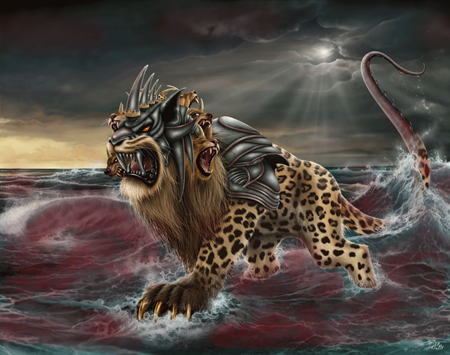
The Byzantine Empire ultimately collapsed with the rise of the Ottoman Empire. In my earlier writing, I explained the vision recorded in Revelation 13, where John wrote: “The dragon stood on the shore of the sea, and I saw a beast coming out of the sea. It had ten horns and seven heads, with ten crowns on its horns, and on each head a blasphemous name. The beast I saw resembled a leopard, but had feet like those of a bear and a mouth like that of a lion. The dragon gave the beast his power, his throne, and great authority.”
As I previously explained, the dragon in this vision represents Satan. The image of the dragon standing beside the sea symbolizes Satan watching over the masses of humanity, waiting for a pivotal moment to unfold. The beast rising from the sea signifies the emergence of powerful historical forces—human empires and events—symbolically portrayed through the characteristics of three animals.
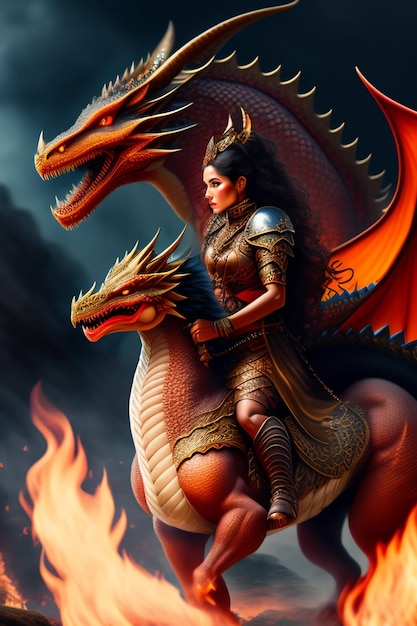
Through the insight God granted me, I came to understand something deeper: Satan continually attempts to reshape his image into something appealing rather than the hideous reality Scripture reveals. I realized this after noticing how modern films often portray dragons as friendly, noble, or heroic creatures. This is not harmless entertainment; it is a subtle distortion meant to influence minds—especially children—into viewing the dragon as something good. Satan’s deceptions frequently target the young, for they are innocent and easily shaped.
As God continued to open my understanding, He made it clear that the imagery in John’s vision points to the rapid and formidable rise of the Ottoman Empire, which swept across Asia, Europe, and the Middle East. Its expansion was swift like a leopard, its power fierce like a bear, and its voice commanding like a lion. The Ottoman Empire appeared unstoppable in its brutal conquests and subjugation of nations. The atrocities committed during its campaigns were horrific beyond description. I will not recount those details here, but the nature of its rise reveals that this empire operated under the power and authority granted by the dragon.
Some may ask why God did not stop it. The answer lies in prophecy. God revealed these events beforehand and allowed them to unfold. John wrote that the beast bore horns and crowns marked with blasphemy. God permitted this as judgment against the corrupt Christian leaders and monarchies of that era, whose service to Him had become hypocritical and offensive. Their outward claims of faith masked inward rebellion, and God abhorred their false worship.
In this vision, God also allowed the conquest of Jerusalem, the holy city. Jesus Himself had prophesied this judgment after the people of His time rejected Him as their Messiah. With deep sorrow, He declared:
“Jerusalem, Jerusalem, you who kill the prophets and stone those sent to you… Look, your house is left to you desolate. For you will not see Me again until you say, ‘Blessed is He who comes in the name of the Lord.’” (Matthew 23:37–39)
Luke recorded a similar warning:
“The days will come upon you when your enemies will build an embankment against you… They will dash you to the ground… because you did not recognize the time of God’s coming to you.” (Luke 19:41–44)
Jesus repeated this prophecy to His disciples when they marveled at the beauty of the temple:
“Truly I tell you, not one stone here will be left on another; every one will be thrown down.” (Matthew 24:2)
Before the rise of the Ottoman Empire, the Romans fulfilled this prophecy. They besieged Jerusalem, cut off all supplies, and drove the people to starvation. In August of 70 CE, they breached the city’s final defenses, massacred nearly the entire population, and destroyed the Second Temple. Rome celebrated this victory by erecting the Arch of Titus. Thus, Jesus’ prophecy came to pass exactly as He had spoken.
After the fall of the Byzantine Empire, many Jews who had embraced the teachings of the apostles continued to spread the gospel despite severe persecution. Christianity endured through torture, executions, and public humiliation. Because Satan could not stop the spread of the gospel, he countered it by raising a deceptive religious system through the Ottoman Empire. This aligns with John’s vision: the dragon, Satan, gave authority to the beast to resist the growth and influence of God’s Word.
Within this narrative, God permitted Satan to influence the emergence of a new belief system, Islam, as a challenge to the expanding Christian faith. In this understanding. Satan appeared to a man in the Middle East, a pagan, and exerts influence over him, leading him to establish a belief system fashioned to mirror and oppose the truth, and he moved upon him to raise a doctrine fashioned in likeness to the truth, yet set against the Gospel of Christ.His messages became the foundation of the Islam of the Ottoman Empire.
It is important to understand that God does not reveal His Word or His nature to those who refuse to acknowledge Him. God speaks to individuals who recognize Him as the Creator and Lord of all. Consider Samuel, whom God chose as Israel’s first prophet while he was still a young boy, dedicated by his mother Hannah to serve at the altar. Even in childhood, Samuel knew of God and was raised in His presence.
During that period, there was no one in Israel whom God could use as a faithful and upright leader or priest. Eli, the high priest, was no longer walking rightly before God, and his sons were openly corrupt. Therefore, God called Samuel, only about five years old at the time, to serve Him. Scripture says that “the boy Samuel ministered before the Lord under Eli,” and that in those days “the word of the Lord was rare; there were not many visions.”
God then revealed Himself to Samuel and declared His judgment:
“See, I am about to do something in Israel that will make the ears of everyone who hears about it tingle. At that time, I will carry out against Eli everything I spoke against his family, from beginning to end. For I told him that I would judge his family forever because of the sin he knew about; his sons blasphemed God, and he failed to restrain them. Therefore, I swore to the house of Eli, ‘The guilt of Eli’s house will never be atoned for by sacrifice or offering.’” (1 Samuel 3:11–14)
Thus, the man whom the Ottoman Empire regarded as their prophet was influenced by a pagan figure revealed to him by the devil. In the writings of Islam, the being who appeared to him is described as the brightest angel who had fallen from heaven. But who is the angel who fell from heaven? How could an angel fall unless he had rebelled against God? Scripture makes it clear that all who rebelled against God were cast out of heaven—Satan and the angels who followed him.
This understanding leads us back to Revelation 12, where John records:
“And there was war in heaven: Michael and his angels fought against the dragon; and the dragon fought and his angels, and prevailed not; neither was their place found any more in heaven. And the great dragon was cast out, that old serpent, called the Devil, and Satan, which deceiveth the whole world: he was cast out into the earth, and his angels were cast out with him.” (Revelation 12:7–9)
This reveals the meaning behind the beast with its three distinct features: it represents Satan’s attempt to spread a counterfeit religion, since he cannot stop the advance of God’s holy Word.
John then describes another striking element of the vision:
“One of the heads of the beast seemed to have had a fatal wound, but the fatal wound had been healed. The whole world was filled with wonder and followed the beast. People worshiped the dragon because he had given authority to the beast, and they also worshiped the beast and said, ‘Who is like the beast? Who can wage war against it?’”
This aspect of the prophecy will be difficult for many who never embraced the truth, yet still claimed to belong under the umbrella of Christianity. The “wounded head” refers to the papacy. During the Byzantine Empire, the pope, though head of the clergy, held no real power. He remained under the authority of the Byzantine emperor.
As the Byzantine Empire declined, the Holy Roman Empire rose swiftly to take its place. Its claim to be a “Holy” empire rested on the fact that it was not governed primarily by political rulers, but by the authority and influence of the pope himself. Under the papacy, particularly during the time of Pope Leo III, the empire gained immense power and prestige.
The turning point came when Pope Leo III crowned Charlemagne, proclaiming him “Augustus and Emperor.” In this act, the pope bowed before Charlemagne and honored him in the manner of the ancient emperors, effectively establishing the Holy Roman Empire. This coronation marked a dramatic shift: the transfer of imperial authority from the Greeks to the Germans. It also demonstrated that the pope possessed the power to bestow imperial titles and, by implication, the authority to transfer that power to whomever he chose.
This event greatly strengthened the papacy and solidified its expanding religious and secular authority. It revealed the pope’s rising influence, as he positioned himself not merely as a spiritual shepherd but as the one who could legitimize emperors. His ambition was to unify Christianity under a single religious and political structure, binding Christendom together through the authority of the Roman Church.
This development took deeper root during the transformation of Constantinople into a Christian capital. With the establishment of the new Roman Catholic Church, the belief emerged that the new capital deserved ecclesiastical preeminence alongside the historic seat of Peter. This claim rested on the conviction that Peter was the divinely appointed leader of the early Church, as affirmed by Jesus when He said, “And I tell you that you are Peter, and on this rock I will build my church, and the gates of Hades will not overcome it” (Matthew 16:18).
As the Holy Roman Empire expanded, it evolved into a formidable institution. Its growth coincided with the strengthening of the Roman Catholic Church, which became deeply intertwined with imperial governance. The merging of religious authority with political power produced an empire that was both profoundly influential and immensely powerful, shaping the course of European history for centuries.
How does this connect to the “wounded head” described in John’s vision? In what way was this head wounded, and who was responsible for inflicting that wound?
I’ll continue in the next section since this is getting a bit long.
The vision given to John in Revelation 13 is difficult to understand unless God Himself chooses to reveal its mystery. I thank God for using me as a vessel to share what He has shown. He instructed me to make these things known to all. Through the guidance of the Holy Spirit, I was given insight as we draw closer to the fulfillment of the prophecies that must take place before the return of Jesus. Everything that has been foretold must come to pass, and then the end will come. No one knows the exact day. Jesus said that even the Son of Man does not know, only the Father, who has appointed the time. Therefore, everyone must remain ready at all times.
Now I will share what God has taught me about this prophecy. Even John himself did not fully grasp its meaning; he was simply instructed to record what he saw. Afterward, he was taken up to heaven without experiencing death, fulfilling the promise Jesus had made to him. This is why Peter once questioned Jesus, many believed, especially the rest of the disciples, that John was especially beloved and would never die. Pointing to John, Peter asked, “Lord, is he not going to die?” Jesus answered, “If it is my will that he remain until I return, what is that to you? You follow me.” John recorded this himself in John 21:20–22.
Everyone knew John was the youngest among the disciples, likely still in his mid‑teens, perhaps sixteen or seventeen, and Jesus often brought him along wherever He went. John’s older brother James also tried to stay close behind. Jesus revealed many things to John, answering him whenever he sought understanding.
Some may wonder, “Does God show favoritism?” I have written about this before, but it is worth repeating: the apostle Paul said, “God does not show favoritism.” Yet God does grant special favor to certain individuals whom He chooses as prophets and messengers. These chosen ones were not given lives of luxury or ease. Their trials were immense, just so far beyond what words can fully describe. Still, God sustained them, delivered them, and prepared a secure place for them in heaven because they endured and remained faithful.
The real question is this: would you endure as those early Christians did, those who faced the flames, the sword, the arena, and the jaws of wild beasts? The first saints earned that title not through comfort or ease, but through a faith so unshakable that they lifted hymns to heaven even as Emperor Nero and other merciless rulers condemned them to die.
But what about you?
If you stood before the executioner’s blade, the instruments of torture, or the roaring lion, would praise still rise from your lips? Could you sing a hymn with death staring you in the face? Or would fear twist your voice into curses, bitterness, and denial?
Today, only a small remnant truly pauses to remember John the Baptist. He was executed by beheading, yet he received no grand memorial, no earthly honor—no crowds mourning his death, no officials offering tributes, no flowers, no donations, no eloquent speeches. And still, his faithfulness has outlived every monument this world could have built. John’s entire life was a trumpet in God’s hand, sounding the arrival of the Messiah. He understood his calling so deeply that he declared, “He must become greater; I must become less” (John 3:30).
And here lies the irony: though he died without honor, who today does not know his name? His legacy endures far beyond the reach of earthly applause. Jesus lived during John’s final days, and by earthly relation they were cousins—Mary, still a young teenager, visited her older cousin Elizabeth, who was already carrying John in her womb. Even before birth, John was set apart.
Yet John was not the only one whose faithfulness went uncelebrated. Consider the rest of the twelve disciples (excluding Judas Iscariot), or the great prophets, such as Daniel, Isaiah, Elijah, Jeremiah, and Elisha. Who builds monuments for them? Who pauses to thank them for their sacrifice, their courage, their unwavering devotion? Their names echo through Scripture, but the world rarely stops to honor them.
And even now, many preach the Word of God with mixed motives. As Paul wrote, “It is true that some preach Christ out of envy and rivalry, but others out of goodwill. The latter do so out of love, knowing that I am put here for the defense of the gospel. The former preaches Christ out of selfish ambition, not sincerely, supposing that they can stir up trouble for me while I am in chains. But what does it matter? The important thing is that in every way, whether from false motives or true, Christ is preached. And because of this, I rejoice.” (Philippians 1:15–18). Yet Paul rejoiced that Christ was preached regardless of motive. But Jesus Himself warned that not all who preach in His name truly belong to Him. “Many will say to me on that day, ‘Lord, Lord, did we not prophesy in your name…?’ Then I will tell them plainly, ‘I never knew you. Away from me, you evildoers’” (Matthew 7:22). Why? Their preaching was fueled by money, fame, and the hunger for applause, but not truly by love for God.
We do not want to walk that path. We do not want our service to be hollow, our devotion to be performance, our faith to be a stage. The examples of John, the prophets, and the apostles stand as a warning and a call: true faithfulness is rarely celebrated on earth, but it is always honored in heaven.
Remember also that Jesus was alive during John’s execution, yet He did not intervene to stop the beheading ordered by King Herod. This became a test of John’s own faith, a sober reminder that anyone who accepts the responsibility of serving God must be prepared to face severe trials—whether persecution, fire, or even death. Those who envy the calling of prophets should pause and consider honestly: could you endure such a fate? As mentioned earlier, Mary—likely around seventeen—had visited Elizabeth, who was six months pregnant with John, to share the astonishing news that God had chosen her to carry the Messiah. It had already been prophesied that John would be a prophet, and his birth fulfilled that prophecy. From the very beginning, even before he entered the world, John was anointed for this calling. He did not appoint himself, nor was he hired, sponsored, or elevated by human authority. It simply does not work that way. I will explore this in greater detail in another topic.
But above all, consider Jesus Himself. The Son of God, who gave His life on the cross for the world, received no public mourning, no grand procession, no lavish memorial. As He hung dying, only His mother Mary, Mary Magdalene, the apostle John, and a few devoted women stood at a distance to witness His final moments, while the rest of the disciples, those who once vowed loyalty, fled in fear. If even they shrank back in the hour of testing, how much more do we falter when life is no longer comfortable, when faith is challenged, when circumstances turn dark?
Even at Jesus’ burial, only two men dared to take His body down from the cross, while the rest of the disciples were nowhere to be found. Only Nicodemus and Joseph of Arimathea found the courage to remove His body and lay Him in a tomb. No crowds gathered to mourn. No wreaths were offered. No ceremony marked His death. The Savior of the world was laid to rest in silence and secrecy. Yet today, many seek to glorify their own works for fame and profit, using the words of God as a platform to make themselves known.
Now, returning to John’s vision in Revelation 13, I repeat these truths often because they are not easy to understand. I myself did not comprehend them until God granted me insight. I speak only as a humble messenger.
John wrote: “The beast I saw resembled a leopard, but had feet like those of a bear and a mouth like that of a lion. The dragon gave the beast his power and his throne and great authority. One of the heads of the beast seemed to have had a fatal wound, but the fatal wound had been healed. The whole world was filled with wonder and followed the beast. People worshiped the dragon because he had given authority to the beast, and they also worshiped the beast and asked, ‘Who is like the beast? Who can wage war against it?’”
In this vision, three animal features are emphasized: a leopard’s body, the feet of a bear, and the mouth of a lion. These symbolize major events within the larger prophecy. The leopard represents the Ottoman Empire because of its swift and relentless conquests. It expanded rapidly across the Middle East, much of Asia, and parts of Europe.
The beast’s feet, “like those of a bear,” symbolize the Ottoman Empire’s strength, ferocity, and capacity for forceful conquest, while the “lion’s mouth” reflects its fierce and intimidating power. The beast receiving authority from the dragon represents a symbolic granting of destructive influence. Each animal image contributes to the portrait: the bear’s claws signify raw power, the leopard suggests swift expansion, and the lion conveys dominant rule. Together, these symbols depict an empire that advanced rapidly, governed aggressively, and crushed resistance. John’s vision, interpreted through this imagery, points to the rise of the Ottoman Empire and its decisive role in the fall of the Byzantine Empire in 1453.
Historically, the Ottoman expansion unfolded through warfare, sieges, and the military practices typical of empires in that era. Many Christian communities were displaced, and numerous churches, especially throughout former Byzantine lands, were converted into mosques following the conquest. Traces of this history remain visible today in places like Istanbul’s Hagia Sophia or sites in Spain such as the Alhambra in Granada, which reflect earlier periods of Islamic rule on the Iberian Peninsula. I am grateful to God for allowing me to visit these places and witness their history firsthand. I have my own photographs, but the experience is far more powerful when you see it with your own eyes.
In the late 11th century, Western European Christians launched what became known as the Crusades, responding to centuries of Muslim territorial expansion. Their goals included halting the spread of Islam, reclaiming the Holy Land in the eastern Mediterranean, recovering formerly Christian regions, and converting or conquering pagan territories. Many who joined these campaigns viewed them as acts of penance and spiritual redemption.
In a symbolic interpretation, the “ten horns with ten crowns” are portrayed by God as blasphemous, representing the same barbarian rulers mentioned in John’s vision in Revelation 12—leaders who adopted Christianity and rose to power as monarchs, whether kings, queens, or princes. Although these monarchies professed loyalty to Christ, many were steeped in corruption, adultery, greed, brutality, immorality, and even incest, and their treatment of poor peasants was often too horrific to fully recount. For this reason, God condemns their practices and declares their claimed service to Him as blasphemy. Yet history books rarely speak plainly about their wickedness or the depth of their corruption. Likewise, many priests, despite their white robes, offered services that God Himself calls blasphemous and abhorrent, for their religious practices reflected the same abuses—corruption, irreverence, and dishonor toward the faith they claimed to uphold. Without tracing every historical detail, it is enough to note that as Byzantium declined, these Christian monarchies fought ruthlessly for dominance, even as the Ottoman Empire expanded and a new power—the Holy Roman Empire, ruled by the high priest known as the pope—rose rapidly in influence. This empire grew even stronger after the Byzantine Empire finally collapsed.
Within this framework, the imagery often associated with the Ottoman Empire—a leopard with the feet of a bear and the mouth of a lion—becomes, in this interpretation, a symbolic picture of its rise and power. Some preachers apply this imagery to Christian leadership, but in this view, John’s vision points instead to the emergence and expansion of Islam as a major world force. With this understanding, the symbolism becomes clearer, the mystery unveiled, and the meaning revealed.
I will now turn to the “little horn” that grew and became exceedingly blasphemous, was wounded, and later healed. In this interpretation, the little horn represents the unified influence of corrupt religious authorities within segments of the Christian church. This is difficult for many to accept because it does not point to an outside empire but instead exposes failures found within Christianity itself. According to this perspective, God intends to reveal and confront all the evil and blasphemous deeds committed under the guise of religious authority.
The rising influence of the Holy Roman Empire, once this mystery is fully revealed, will astonish many. I recognize that this may anger some readers, especially those whose religious loyalties are tied to the specific church being referenced.
I will address this in the fifth segment, as it marks the rise of another fierce and bitter persecution of Christians carried out by the blasphemous “little horn.” This is the same horn that rose and replaced three others in John’s vision.
Page 1 of 26
Gallery
God provided us a bridge to heaven
This bridge symbolizes our connection with Jesus
On the road again
This slideshow uses a JQuery script adapted from Pixedelic