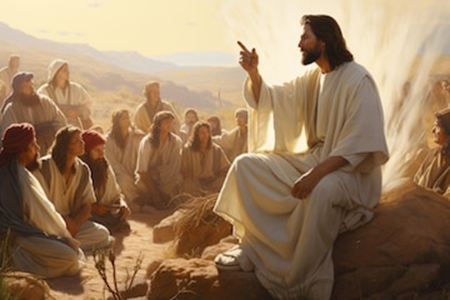
Read them daily, for they are your spiritual nourishment. Just as the body needs physical food to grow strong and stay healthy, your soul craves the wisdom, truth, and guidance that come from God’s Word. Scripture is not meant to be read occasionally or merely admired—it is to be taken in regularly, feeding your spirit with life, clarity, and strength.
Each verse offers insight, each promise revives hope, and each command draws you closer to the heart of the Divine. When you make reading God’s Word a daily habit, you’ll find your perspective shifting, your faith deepening, and your path made clearer—even in times of confusion.
Let the Word dwell richly in you, for in it is the nourishment that sustains eternal life.
“A man had a fig tree growing in his vineyard, and he went to look for fruit on it but did not find any.So he said to the man who took care of the vineyard,
‘For three years now I’ve been coming to look for fruit on this fig tree and haven’t found any.Cut it down!Why should it use up the soil?’
‘Sir,’ the man replied, ‘leave it alone for one more year, and I’ll dig around it and fertilize it.If it bears fruit next year, fine!If not, then cut it down!’”
Jesus told His disciples a parable to show them that they should always pray and not give up.He said:
“In a certain town there was a judge who neither feared God nor cared what people thought.And there was a widow in that town who kept coming to him with the plea,
‘Grant me justice against my adversary.’
For some time he refused.But finally he said to himself,
‘Even thought I don’t fear God or care what people think, yet because this widow keeps bothering me, I will see that she gets justice, so that she won’t eventually come and attack me!’
And the Lord said,
‘Listen to what the unjust judge says.And will not God bring about justice for His chosen ones, who cry out to Him day and night?Will He keep putting them off?I tell you, He will see that they get justice, and quickly.However, when the Son of Man comes, will He find faith on the earth?’”
Let’s learn from a real-life event. Today, many people appear to be pious and religious—but are they truly? This story challenges us to look deeper.
There was a man who seemed devout. He attended religious services regularly, spoke of faith often, and gave the impression of righteousness. Yet when faced with a moment of truth, his actions revealed something else. His heart was far from God.
This example reminds us that outward appearances can be deceiving. True faith isn’t just about rituals or words—it’s about transformation, humility, and obedience. Heaven isn’t earned through performance; it’s entered through genuine relationship with God.
So let’s ask ourselves: Are we living with authentic faith, or just going through the motions? The story urges us to reflect, repent, and seek a deeper connection with the divine.
Just then a man came up to Jesus.
Teacher,” he asked, “what good deed should I do to have eternal life?”
Jesus asked him, “Why ask me about what is good? There is only one who is good.[d] If you want to get into that life, you must keep the commandments.”
The young man asked him, “Which ones?”
Jesus said, “‘You must not murder, you must not commit adultery,] you must not steal,you must not give false testimony, honor your father and mother, and, ‘you must love your neighbor as yourself.’”
The young man told him, “I have kept all of these.[What do I still lack?”
Jesus told him, “If you want to be perfect, go and sell what you own and give the money to the destitute, and you will have treasure in heaven. Then come back and follow me.
”But when the young man heard this statement, he went away sad, because he had many possessions.
Getting to heaven isn’t easy. Why? Because many people are unwilling to surrender their material possessions, their vices, their luxurious lifestyles, and the comforts of this world. They assume that wealth gives them priority—but it doesn’t.
God desires humility. Yes, He blesses His people with prosperity—not to leave them in poverty or hunger, but so they can live with purpose, generosity, and gratitude. Still, material blessings are not proof of righteousness.
Even the children of Moses did not enter the Promised Land. Despite their heritage, they turned away from God and embraced evil.
What God truly seeks are sincere hearts. He sees beyond appearances. He knows who is loyal and who merely performs religion for show. Outward rituals mean nothing without inward transformation.
In today’s world, we’re surrounded by sermons and teachings from pastors and clergy—many of them rich in wisdom and truth. Yet at the core of it all, God’s message remains simple and direct. Jesus didn’t speak with lofty or complicated language. His words were plain, clear, and accessible to all—but they carried immense power and cut straight to the heart of every listener.
Jesus said:
“If anyone would come after me, let him deny himself and take up his cross and follow me. For whoever would save his life will lose it, but whoever loses his life for my sake will find it. What will it profit a man if he gains the whole world and forfeits his soul? Or what shall a man give in return for his soul?”— Matthew 16:24–26
These words are not just poetic—they are a command. Jesus lays out two clear requirements for anyone who desires to follow Him:
1.Deny yourself
2.Take up your cross
🙅♂️ Denying Yourself
To deny yourself means to surrender everything that stands between you and God. It doesn’t mean abandoning your home or sitting in a corner praying all day. It means choosing humility over pride, holiness over indulgence, and obedience over rebellion.
Give up vices that corrupt your soul—quit smoking, stop binge drinking, leave behind the nightlife that glorifies sin.
Live simply, not lavishly. Let your life reflect God’s will, not worldly desires.
Denying yourself means letting go of the old self—foul language, bribery, dishonesty, love for money, greed, lust, and jealousy.
✝️ Carrying Your Cross
Your cross is your mission—your responsibility to live for Jesus and stand for truth.
Spread the Word of God.
Live a life of integrity: don’t lie, cheat, don’t commit adultery, or turn a blind eye to sin.
Speak out against evil, even when it’s uncomfortable. If a friend changes a price tag in a store, call it out. If a politician promotes corruption, don’t condone it.
Rebuke sin with love and courage. As Scripture says, “Have nothing to do with the fruitless deeds of darkness, but rather expose them.”— Ephesians 5:11
John the Baptist carried his cross boldly. He confronted King Herod for taking his brother’s wife—an act of adultery and incest. John declared, “It is not lawful for you to have your brother’s wife.” For this, Herodias hated him deeply. This is the cost of discipleship: truth over comfort.
🛠 Working for the Kingdom
Jesus said, “My Father is always at His work to this very day, and I too am working.”— John 5:17
If God is working, so must we. Laziness has no place in the life of a disciple. As Paul echoed, “If anyone is unwilling to work, he shall not eat.”— 2 Thessalonians 3:10
Discipleship is not passive—it’s active. It’s a daily commitment to live for Jesus while waiting for His return.
❤️ Love God and Love Your Neighbor
Jesus simplified the commandments into two pillars:
1.Love God
2.Love your neighbor
If we truly love God, we will abandon sin and pursue righteousness. If we love our neighbor—not just the one next door, but every person we encounter—we will act with compassion, justice, and truth.
When you share the truth, do it with love, kindness, and prayer. If your heart is deceitful, your prayers will not reach heaven. Scripture warns that “The Lord is far from the wicked, but He hears the prayer of the righteous.” — Proverbs 15:29
🙌 The Cost of Following Jesus
Following Jesus is not easy—but it is worth everything. He calls us to deny ourselves, carry our cross, love God, love others, live in truth, and work for His Kingdom. This is the path of a true disciple. Yes, it’s challenging—but God is not looking for crowds; He’s looking for commitment. That’s why Jesus chose only twelve disciples, and why only Noah and his family were saved during the flood. Scripture is filled with examples that show God values faithfulness over numbers.
The road is narrow, but the reward is beyond human imagination: eternal life, free from pain, sorrow, and even aging. In God’s Kingdom, youthfulness is restored. If you are young, you will remain so. If you are old, your strength and vitality will be renewed. Aging is a consequence of sin—but in eternity, sin is no more, and life is made whole again.
Many have asked: Why Israel? What made the Jewish people the chosen nation of God? Was there something extraordinary about them? Did they earn this status? And what does it mean for the rest of humanity?
These are deep and important questions, questions that lead us back to the heart of Scripture and the character of God.
The truth is, Israel was not chosen based on merit, power, or perfection. It was based on God’s sovereign choice and His covenant promise. From the beginning, God has always worked through relationships and calling. And the story of Israel begins with one man: Abram.
📖 The Call of Abram
In the book of Genesis, we encounter a pivotal moment in God’s redemptive plan for humanity. Amid a world filled with many nations, such as Canaanites, Amorites, Egyptians, Assyrians, and others, God looked upon the earth and found one man whose heart was faithful: Abram.
Abram lived in Ur of the Chaldees, a city in what is now southern Iraq. He was the son of Terah, and together with his family, he later settled in Haran, a region now part of modern-day Turkey. It was in Haran that God spoke to Abram with a life-changing command:
“Leave your country, your people and your father’s household and go to the land I will show you.” (Genesis 12:1)
This was not just a call to relocate—it was a divine invitation to trust, to follow, and to become part of something far greater than himself.
God made a promise to Abram:
“I will make you into a great nation and I will bless you… and all peoples on earth will be blessed through you.”(Genesis 12:2–3)
With faith and obedience, Abram took his wife Sarai, his household, and his nephew Lot, and journeyed toward the land of Canaan, the land God had chosen for him and his descendants.
God gave Abram a new name,Abraham, meaning “father of many.” Sarai became Sarah, and through them, God established a covenant: a sacred promise that would shape the destiny of a people and ultimately bless the entire world.
This was the beginning of Israel’s story, not born of power or prestige, but of faith, obedience, and divine grace. Among all the nations of the earth, only Israel received an everlasting covenant from God: a promise that Abraham would become the father of a new nation, chosen and set apart.
Sarah, though barren, conceived through the power of the Holy Spirit and gave birth to a son at age 90, while Abraham was 100. When God revealed this promise, Abraham laughed in disbelief. But the Lord responded with a question that still echoes through time:
“Is anything too hard for the Lord? I will return to you at the appointed time next year, and Sarah will have a son.”(Genesis 18:14)
Indeed, nothing is too hard for God. The universe itself was created from nothing—spoken into existence by His Word. His promises are not limited by human weakness but are fulfilled by His sovereign power and perfect timing.
.
🕊️ Chosen for a Purpose
Being chosen did not mean Israel was superior. It meant they were set apart for a divine purpose: to be a light to the nations, to carry the message of God’s truth, and ultimately, to bring forth the Messiah, Jesus Christ.
God’s covenant with Abraham was not just about land or lineage. It was about faith. Abraham believed in God, and it was credited to him as righteousness. His obedience became the foundation for a people who would be called to walk with God.
🙏 Reflection
Today, we can learn from Abraham’s story. God still calls people to step out in faith, to leave behind comfort and familiarity, and to follow Him into the unknown. Like Abraham, we may not see the full picture, but we trust the One who leads – Jesus Christ, the God Son.
Israel’s journey reveals a profound truth: God chooses according to His divine will—not because of human merit, but because of His character and purpose. Through Jesus Christ, this sacred covenant was extended beyond Israel to all who believe—first to the Jews, then to the Greeks, and ultimately to the Gentiles. As the Apostle Paul affirmed, “If you belong to Christ, then you are Abraham’s seed, and heirs according to the promise.” (Galatians 3:29)
The Greeks were among the earliest seekers of Jesus, drawn by a deep hunger for His message and blessings. Their desire to encounter Him was so earnest that they witnessed a moment of divine affirmation: the voice of the Father declaring, “This is my Son, in whom I am well pleased.” This marked a turning point, revealing that the invitation to God’s kingdom was open to all who would receive it in faith.
Jesus Walks on Water — And So Did Peter: A Lesson in Faith
After the twelve disciples chose to follow Jesus, they committed their lives to walking with Him, literally and spiritually. They traveled wherever He went, preaching the gospel, healing the sick, and casting out demons. Their survival came through the generosity of others: some families, including the disciples’ mothers, followed and supported them with food and provisions. Others gave donations. Judas Iscariot, ironically, was the treasurer.
Jesus didn’t stay in one place. The Pharisees and Sadducees constantly opposed Him, so He moved throughout Israel, preaching in towns, villages, and homes. Sometimes He sent His disciples out two by two, instructing them:
“If anyone will not welcome you or listen to your words, leave that home or town and shake the dust off your feet.”
One evening, after a long day of ministry, Jesus told His disciples to get into a boat and go ahead of Him to the other side of the lake. He dismissed the crowd and went up a mountainside alone to pray. As night fell, the boat was far from shore, tossed by waves and battered by wind.
Then, just before dawn, Jesus came to them, walking on the water.
The disciples were terrified.
“It’s a ghost!”
They cried.
But Jesus called out,
“Take courage! It is I. Don’t be afraid.”
Peter, bold and impulsive, replied:
“Lord, if it’s You, tell me to come to You on the water.”
Jesus said,
“Come.”
Peter stepped out of the boat and walked on the water toward Jesus. But when he saw the wind and waves, fear overtook him. He began to sink and cried out: “Lord, save me!”
Immediately, Jesus reached out His hand and caught him.
“You of little faith,”
He said,
“Why did you doubt?”
When they climbed back into the boat, the wind calmed. The disciples worshiped Him, saying:
“Truly You are the Son of God.”
💡Faith Like Peter — But Stronger
We often behave like Peter. We say, “Yes, Lord, I’m ready to serve!” But when trials come—sickness, financial loss, broken relationships—we falter. We sink.
Peter’s story reminds us of two things:
1.Presumptive faith is dangerous. Just because we know God is with us doesn’t mean we should leap into trouble without His command. Peter asked first, and Jesus said, “Come.” But even then, Peter doubted.
2.Redemptive faith is powerful. Peter cried out, “Lord, save me!” And Jesus did—immediately.
Can we do the same? Can we call on Jesus the moment we fall?
Some people lose faith when life gets hard. When money runs out, when jobs are lost, when illness strikes—faith can waver. But Jesus is always ready to save. He doesn’t wait. He doesn’t hesitate. He reaches out His hand the moment we cry out.
🙌 A Call to Trust
Let us not repeat the mistake of false confidence. Let us not pretend we can walk on water without God’s word. Instead, let us walk in obedience, step out in faith when He calls, and cry out to Him when we fall.
Jesus is near. He sees you. He hears you. And He is ready to save.
Will you trust Him today? Will you call on Him—not just when you’re sinking, but even before the storm begins?
Page 7 of 26
Gallery
God provided us a bridge to heaven
This bridge symbolizes our connection with Jesus
On the road again
This slideshow uses a JQuery script adapted from Pixedelic