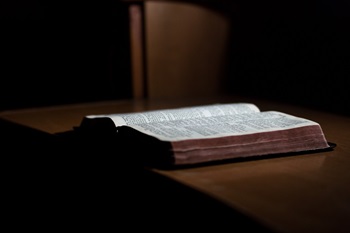
Read them daily, for they are your spiritual nourishment. Just as the body needs physical food to grow strong and stay healthy, your soul craves the wisdom, truth, and guidance that come from God’s Word. Scripture is not meant to be read occasionally or merely admired—it is to be taken in regularly, feeding your spirit with life, clarity, and strength.
Each verse offers insight, each promise revives hope, and each command draws you closer to the heart of the Divine. When you make reading God’s Word a daily habit, you’ll find your perspective shifting, your faith deepening, and your path made clearer—even in times of confusion.
Let the Word dwell richly in you, for in it is the nourishment that sustains eternal life.
“A man had a fig tree growing in his vineyard, and he went to look for fruit on it but did not find any.So he said to the man who took care of the vineyard,
‘For three years now I’ve been coming to look for fruit on this fig tree and haven’t found any.Cut it down!Why should it use up the soil?’
‘Sir,’ the man replied, ‘leave it alone for one more year, and I’ll dig around it and fertilize it.If it bears fruit next year, fine!If not, then cut it down!’”
Jesus told His disciples a parable to show them that they should always pray and not give up.He said:
“In a certain town there was a judge who neither feared God nor cared what people thought.And there was a widow in that town who kept coming to him with the plea,
‘Grant me justice against my adversary.’
For some time he refused.But finally he said to himself,
‘Even thought I don’t fear God or care what people think, yet because this widow keeps bothering me, I will see that she gets justice, so that she won’t eventually come and attack me!’
And the Lord said,
‘Listen to what the unjust judge says.And will not God bring about justice for His chosen ones, who cry out to Him day and night?Will He keep putting them off?I tell you, He will see that they get justice, and quickly.However, when the Son of Man comes, will He find faith on the earth?’”
When Jesus walked the earth, He tirelessly traveled from town to town, preaching the gospel and revealing the love of God to all people. With His twelve disciples by His side, He journeyed across Israel and even into nearby regions like Lebanon and parts of Syria—on foot, with purpose and compassion.
One day, Jesus chose to pass through Samaria, a region often avoided by Jews. Samaritans were considered outsiders, descendants of Israelites who had intermarried with non-Jews. Because of this, they were viewed as impure and lived separately from the rest of Jewish society.
As the Gospel of John tells us, Jesus arrived in a Samaritan town called Sychar, near the land Jacob had given to his son Joseph. There, beside Jacob’s well, Jesus, tired from the journey, sat down to rest. It was noon, the hottest part of the day.
A Samaritan woman came to draw water, and Jesus spoke first:
“Will you give me a drink?”
His disciples had gone into town to buy food, leaving Jesus alone. The woman was surprised.
“You are a Jew and I am a Samaritan woman. How can you ask me for a drink?”
She knew that Jews did not associate with Samaritans.
But Jesus replied with a deeper truth:
“If you knew the gift of God and who it is that asks you for a drink, you would have asked Him, and He would have given you living water.”
Confused, she said,
“Sir, you have nothing to draw with and the well is deep. Where can you get this living water? Are you greater than our ancestor Jacob?”
Jesus answered,
“Everyone who drinks this water will be thirsty again, but whoever drinks the water I give will never thirst. It will become a spring of water welling up to eternal life.”
The woman’s heart stirred.
“Sir, give me this water so I won’t get thirsty and have to keep coming here.”
Jesus then gently revealed her truth:
“Go, call your husband and come back.”
She replied,
“I have no husband.”
Jesus said,
“You are right. You’ve had five husbands, and the man you now live with is not your husband.”
Stunned, she said,
“Sir, I can see you are a prophet. Our ancestors worshiped on this mountain, but you Jews say we must worship in Jerusalem.”
Jesus responded with a powerful revelation:
“Believe me, a time is coming when you will worship the Father neither on this mountain nor in Jerusalem. True worshipers will worship the Father in spirit and in truth, for they are the kind of worshipers the Father seeks. God is spirit, and His worshipers must worship in spirit and in truth.”
The woman said,
“I know that Messiah is coming. When He comes, He will explain everything.”
Jesus looked at her and declared,
“I, the one speaking to you—I am He.”
At that moment, the disciples returned and were surprised to find Jesus speaking with a woman, but no one questioned Him.
The woman, overwhelmed, left her water jar and ran back to town, shouting: “Come, see a man who told me everything I ever did. Could this be the Messiah?”
The townspeople came to see Jesus. Meanwhile, the disciples urged Him to eat, but Jesus said, “I have food to eat that you know nothing about.”
Confused, they asked if someone had brought Him food. But Jesus explained,
“My food is to do the will of Him who sent Me and to finish His work. Look at the fields—they are ripe for harvest. One sows and another reaps. I sent you to reap what you have not worked for. Others have done the hard work, and you have reaped the benefits.”
Many Samaritans believed because of the woman’s testimony. They asked Jesus to stay, and He remained with them for two days. Because of His words, many more believed.
They said to the woman,
“We no longer believe just because of what you said; now we have heard for ourselves, and we know that this man really is the Savior of the world.”
This story reminds us that Jesus meets us where we are—no matter our past, our background, or our brokenness. He offers living water, eternal life, and a relationship that transforms. Like the woman at the well, may we be bold to share our encounter with Christ so others may believe and know Him as Savior.
Throughout Scripture, we see a powerful pattern: God often calls the youth to carry His message and fulfill His divine purpose. One striking example is the prophet Jeremiah. Before Jeremiah was even born, God declared,
“Before I formed you in the womb I knew you; before you were born I set you apart”(Jeremiah 1:5).
When Jeremiah responded, “But I am only a boy, Lord,”
God reassured him:
“Do not be afraid of them, for I am with you and will rescue you.”
Then the Lord touched Jeremiah’s mouth and said,
“I have put My words in your mouth. Go where I send you and speak what I command.”
Just as God called Jeremiah, He continues to call young people today—including me. As a youth chosen to be His messenger, I write these words without fear. God calls young hearts to rise, speak truth, and serve boldly.
Even Jesus chose young men to be His disciples. All twelve were youthful, including John, the author of Revelation, who was likely in his late teens. John and his brother James were fishermen helping their father when Jesus called them to follow Him. They left their nets behind, and their mother followed them closely, even asking Jesus,
“Can my sons sit at Your right and left hand in Your kingdom?”
Jesus responded gently, “Can they drink the cup I will drink?”—referring to the trials and persecution that come with serving God. Though John and James answered, “Yes, Lord, we can,” they didn’t fully grasp the depth of that commitment. Yet Jesus, knowing their future, affirmed their calling. James would later become the first disciple martyred, executed by King Herod. He remained faithful to the end.
Jesus also clarified to their mother, “It is not for Me to grant who sits at My right or left. That is for the Father to decide.”This humbled the family and taught a deeper truth. When the other disciples heard of the request, they were upset. But Jesus taught them,
“Whoever wants to be great must become a servant. The least among you will be the greatest.”
So if you are young and feel God’s call—embrace it. God has a unique mission for each of us. Spiritual growth takes time, discipline, and surrender. It’s like a potter shaping clay: the refining process is essential to create something beautiful. In the same way, God molds young lives through trials and perseverance.
For all the youth, be ready. Be strong. As God promises,
“They will run and not grow weary; they will walk and not faint.”
To be called by God is a sacred commission. He sees you. He chose you. So don’t be distracted by evil or deceived by the enemy. Stand firm in your calling.
In this world, we witness events that feel overwhelming. The rise in crime and violence horrifies us. It stirs anger and sorrow, and we cry out to God, asking, “Why?” Some begin to wonder if God even hears us. Is He turning a deaf ear to our cries? Where is He in the midst of such horror?
Evil seems to thrive. The wicked grow richer and more powerful, while truth is trampled and deception spreads like wildfire. Again, we cry, “Why, Lord? Why?”
But when we return to Scripture, we find that Jesus warned us in advance. He saw the future and spoke these words:
“I have told you these things, so that in me you may have peace. In this world, you will have trouble. But take heart! I have overcome the world.” (John 16:33)
The pain we feel is real—and it’s shared by many believers. But Jesus reminds us not to stop praying, not to lose faith. Millions cry out to God daily. Some prayers are desperate, especially in moments of life and death. Communities often come together to support those in need, offering comfort and compassion in times of crisis.
Let me share one such story.
There was a widowed woman with no family left except her young son. She struggled as a single mother, doing her best to care for him and herself. Then tragedy struck—her son fell ill with a deadly disease. With no access to proper medical care, he passed away.
She wept bitterly. Her grief was deep and raw. Yet in her sorrow, her neighbors and the entire town came together to help her bury her son, offering love and support in her darkest hour.
Let’s listen to her story—not just with our ears, but with our hearts. It reminds us that even when answers don’t come the way we expect, God is still present. He answers prayers in His perfect timing and according to His divine will.
Soon afterward, Jesus went to a town called Nain, and his disciples and a large crowd went along with him. As he approached the town gate, a dead person was being carried out—the only son of his mother, and she was a widow. And a large crowd from the town was with her.
When the Lord saw her, his heart went out to her and
Jesus said,
“Don’t cry.”
Then he went up and touched the bier they were carrying him on, and the bearers stood still.
He said,
“Young man, I say to you, get up!”
The dead man sat up and began to talk, and Jesus gave him back to his mother.
1They were all filled with awe and praised God. “A great prophet has appeared among us,” they said. “God has come to help his people.” This news about Jesus spread throughout Judea and the surrounding country.
This story teaches us a profound truth: God hears our sincere prayers and cries of pain. Sometimes, He responds immediately with miraculous power. Other times, He waits—not because He doesn’t care, but because His timing reveals something greater.
The widowed mother prayed day and night, pleading for her son’s life. Yet he died. Why did God allow that? Because through this tragedy, He demonstrated His divine authority over life and death. Jesus came, heard the mother’s cries, and comforted her. Then He performed a miracle that stunned the entire town—He raised her son from the dead.
This wasn’t just a healing—it was a resurrection. The boy had been dead for days, yet Jesus breathed life into him, just as God did when He created Adam from dust. It was a reminder that nothing is impossible for God.
Jesus said, “For man it is impossible, but for God, all things are possible.”What seems hopeless to us is a small thing for Him.
The townspeople witnessed this miracle and were filled with awe. They saw firsthand the power and mercy of God. And so should we.
Let this story encourage us: never stop praying. God knows the perfect time to answer. His mercy is great, and His power is beyond measure. Trust Him, thank Him, and keep believing.
The Book of Revelation is a divine tapestry of prophecy—filled with symbols that reveal future events. Some of these events have already come to pass, while others are still unfolding before our eyes.
In Revelation 12, we encounter a striking image:
“An enormous red dragon with seven heads and ten horns and seven crowns on its heads. Its tail swept a third of the stars out of the sky and flung them to the earth.”
What does this mean?
Each verse in Revelation 12 carries profound meaning. These are not random visions—they are revelations from God, unveiled through His messengers so that we may understand and not be deceived by Satan and his agents.
We are living in the end times, the final generation. No one knows the exact day or hour of the world's end—only God the Father holds that knowledge. But the signs are clear, and the urgency is real. God is still calling people to repent, to turn from sin and embrace His truth.
Heaven is vast and welcoming.
As Jesus promised:
“In My Father’s house are many mansions… I go to prepare a place for you.”
Isn’t that a beautiful promise for all who believe?
God does not lie. Every word He speaks comes to pass. So what is the meaning behind the red dragon’s seven heads, ten horns, and seven crowns?
That mystery is about to be revealed…
What’s unfolding in our world today has already been foretold. These events are not random; they are part of a divine blueprint revealed through prophecy. We are living in the prophetic age, a time outlined in Scripture, and we are the prophetic people, witnessing the fulfillment of what God has already declared. Though we cannot see the future, God knows it fully and has revealed glimpses through His Word.
Now, the interpretation:
The seven heads of the dragon represent the fullness of Satan’s power and influence across kingdoms and ages. As previously revealed, the dragon is Satan, once known as Lucifer, the most beautiful angel in heaven. After his rebellion, God named him Satan, the old serpent, the deceiver of nations.
This aligns with the vision given to John in Revelation:
“Its tail swept a third of the stars out of the sky and flung them to the earth. The dragon stood in front of the woman who was about to give birth, so that it might devour her child the moment he was born.” (Revelation 12:4)
In the book of Revelation, the stars symbolize angels—heavenly beings created to serve and worship God. One-third of these angels were deceived by Satan, not through force, but through subtlety and persuasion. The image of the dragon’s tail sweeping them from the sky illustrates how easily deception can spread when cloaked in cunning. That tail, a symbol of manipulation and rebellion, became the very tool Satan used to lead a heavenly insurrection.
John’s vision reveals the cosmic battle that followed—the first war in all of creation, not on earth, but in heaven. Revelation 12:7–9 describes this conflict:
“Then war broke out in heaven. Michael and his angels fought against the dragon, and the dragon and his angels fought back. But he was not strong enough, and they lost their place in heaven. The great dragon was hurled down—that ancient serpent called the devil, or Satan, who leads the whole world astray. He was hurled to the earth, and his angels with him.”
In this passage, Michael is understood by many as a representation of God Himself, leading the heavenly host against Satan—the dragon, the ancient serpent, the deceiver of nations. Though Satan rallied a third of the angels in rebellion, he was ultimately defeated and cast out of heaven along with his followers.
This celestial battle marked a turning point in the spiritual realm. Satan, once known as Lucifer, the most radiant of angels, was cast down into the abyss—a realm of darkness, emptiness, and separation from God’s glory. Their fall was not merely a change of location, but a descent into spiritual exile.
This event initiated the ongoing struggle between good and evil—a spiritual warfare that continues to unfold in our world today. Satan’s most potent weapon remains deception, and his influence still seeks to lead humanity astray. Yet even in the midst of this cosmic conflict, God’s truth stands unshaken, and His prophetic Word continues to guide those who seek Him with faith and discernment.
Now, regarding the seven heads of the dragon—they symbolize the seven barbarian kingdoms that emerged gradually over time. These kingdoms did not rise immediately after Satan and his angels were cast to the earth. Instead, their emergence unfolded across many generations—beginning with Adam, through the days of Noah, then Abraham, and eventually leading to the birth of Israel. Thousands of years passed before these kingdoms took shape, each playing a role in the broader spiritual conflict.
The dragon, representing Satan, did not remain idle. He waited by the shore—watching, influencing, and preparing to devour what God was bringing forth. His strategy was patient and calculated, seeking to oppose God's plan at every stage of redemptive history.
Page 8 of 26
Gallery
God provided us a bridge to heaven
This bridge symbolizes our connection with Jesus
On the road again
This slideshow uses a JQuery script adapted from Pixedelic