Read them daily, for they are your spiritual nourishment. Just as the body needs physical food to grow strong and stay healthy, your soul craves the wisdom, truth, and guidance that come from God’s Word. Scripture is not meant to be read occasionally or merely admired—it is to be taken in regularly, feeding your spirit with life, clarity, and strength.
Each verse offers insight, each promise revives hope, and each command draws you closer to the heart of the Divine. When you make reading God’s Word a daily habit, you’ll find your perspective shifting, your faith deepening, and your path made clearer—even in times of confusion.
Let the Word dwell richly in you, for in it is the nourishment that sustains eternal life.
“A man had a fig tree growing in his vineyard, and he went to look for fruit on it but did not find any.So he said to the man who took care of the vineyard,
‘For three years now I’ve been coming to look for fruit on this fig tree and haven’t found any.Cut it down!Why should it use up the soil?’
‘Sir,’ the man replied, ‘leave it alone for one more year, and I’ll dig around it and fertilize it.If it bears fruit next year, fine!If not, then cut it down!’”
Jesus told His disciples a parable to show them that they should always pray and not give up.He said:
“In a certain town there was a judge who neither feared God nor cared what people thought.And there was a widow in that town who kept coming to him with the plea,
‘Grant me justice against my adversary.’
For some time he refused.But finally he said to himself,
‘Even thought I don’t fear God or care what people think, yet because this widow keeps bothering me, I will see that she gets justice, so that she won’t eventually come and attack me!’
And the Lord said,
‘Listen to what the unjust judge says.And will not God bring about justice for His chosen ones, who cry out to Him day and night?Will He keep putting them off?I tell you, He will see that they get justice, and quickly.However, when the Son of Man comes, will He find faith on the earth?’”
As we continue exploring this revelation, it is important to pause and reflect on the one through whom God chose to unveil these mysteries of the future, John. Some readers may not fully understand who John was, so let us briefly revisit his story and the reason he was entrusted with such visions.
John was one of the twelve disciples of Jesus, the youngest among them, likely still in his late teens when he was called. His older brother was James, and together they worked as fishermen with their father, Zebedee. Scripture tells us that Jesus saw them in a boat, mending their nets. At His call, they immediately left their father and the men working with him, choosing instead to follow Christ. This act of obedience marked the beginning of John’s journey as a disciple and later as the one who would receive the Revelation.
Years later, while in exile on the island of Patmos, John was given visions that revealed the mysteries of God’s plan for the future. Among these visions, he wrote of a striking image: “The woman fled into the wilderness to a place prepared for her by God, where she might be taken care of for 1,260 days.”This passage reminds us that God not only reveals the coming trials but also shows His provision and care for those who remain faithful.
Before John’s exile, however, he recorded another powerful moment in his Gospel. After Jesus’ resurrection, He appeared to His disciples by the Sea of Galilee. John writes: “Simon Peter, Thomas (also known as Didymus), Nathanael from Cana in Galilee, the sons of Zebedee, and two other disciples were together. ‘I’m going out to fish,’ Simon Peter told them, and they said, ‘We’ll go with you.’ So they went out and got into the boat, but that night they caught nothing.” (John 21:3).
It was in these post-resurrection appearances that Jesus gave His final instructions. With the eleven disciples (for Judas Iscariot had betrayed Him and perished), Jesus ate with them and commanded: “Do not leave Jerusalem, but wait for the gift my Father promised, which you have heard me speak about. For John baptized with water, but in a few days you will be baptized with the Holy Spirit.”This was the sealing of their anointing, the empowerment to become His emissaries and spread the gospel to the ends of the earth.
Before ascending into heaven, the disciples asked Him, “Lord, are you at this time going to restore the kingdom to Israel?”Jesus replied: “It is not for you to know the times or dates the Father has set by His own authority. But you will receive power when the Holy Spirit comes on you; and you will be my witnesses in Jerusalem, and in all Judea and Samaria, and to the ends of the earth.”Then, before their very eyes, He was taken up, and a cloud hid Him from their sight.
After Jesus’ ascension, the disciples began their full ministry. They often traveled in pairs or groups of three, proclaiming the good news. John frequently partnered with his brother James and with Peter, forming a strong team of witnesses.
Now, returning to the vision given to John on Patmos, God mentioned the 1,260 days. What do these days represent? Our current year is 365 days, so is this a literal number of days, or does it symbolize something greater? John was shown that the woman would be cared for during this time, preserved by God’s hand. The question remains, when will this happen, and how will it unfold?
As we ponder this vision, let us remember: God’s Word is not given to satisfy curiosity about dates, but to strengthen faith, encourage perseverance, and remind us of His sovereignty. Just as John was faithful to record what he saw, we too must be faithful to read, pray, and live according to God’s Word.
The 1,260 Days in Prophecy
This mystery invites us to reflect deeply. Numbers in Scripture often carry symbolic meaning, pointing to seasons of trial, testing, or divine protection. The 1,260 days remind us that God sets boundaries on suffering and persecution. He determines the times and seasons, and He provides refuge for His people even in the wilderness.
In Scripture, God explains that “with the Lord a day is like a thousand years, and a thousand years are like a day” (2 Peter 3:8). This principle helps us understand the vision that speaks of the woman being cared for in the wilderness for 1,260 days. In God’s timing, these days represent 1,260 years.
The vision does not refer to Mary, the mother of Jesus, as in the earlier interpretation of the woman giving birth to the Messiah. Instead, God revealed that the woman symbolizes His church. Which church? The church of Christianity—the body of believers who follow Christ. Christianity is the true church of Jesus, for it was established by Him, the Messiah, the Son of God whom the Father sent to save mankind from sin.
This prophecy of the woman being cared for during 1,260 days (or years) has already been fulfilled in history. After Jesus ascended into heaven, His disciples began their ministry, spreading the gospel throughout the world. Yet at the same time, Satan began his work to oppose and corrupt God’s mission. The words “taken care of in the wilderness” signify that Christianity was divinely protected during a long season of persecution.
The 1,260 years are understood to have begun after the death of James, the brother of John—the very disciple who later received the Revelation. This pivotal moment is recorded in Acts 12, where the apostle Paul describes the beginning of persecution against the church:
“It was about this time that King Herod arrested some who belonged to the church, intending to persecute them. He had James, the brother of John, put to death with the sword. When he saw that this met with approval among the Jews, he proceeded to seize Peter also. This happened during the Festival of Unleavened Bread. After arresting him, he put him in prison, handing him over to be guarded by four squads of four soldiers each. Herod intended to bring him out for public trial after the Passover.”
The church prayed earnestly for Peter, and God answered. Scripture continues:
“The night before Herod was to bring him to trial, Peter was sleeping between two soldiers, bound with two chains, and sentries stood guard at the entrance. Suddenly, an angel of the Lord appeared, and a light shone in the cell. He struck Peter on the side and woke him up. ‘Quick, get up!’ he said, and the chains fell off Peter’s wrists.”
This miraculous deliverance shows that even in the midst of persecution, God’s hand was upon His people. The vision of the woman in the wilderness for 1,260 years reminds us that the church, though attacked and oppressed, was never abandoned. God preserved His truth, sustained His followers, and ensured that the gospel continued to spread.
The woman clothed in white also symbolizes the pure church, the true Christians and faithful followers of Jesus, who willingly gave their lives for God’s cause. They faced death without fear, whether by beheading, being burned alive, being torn apart by lions, or being cut into pieces. History gives us a vivid example in Emperor Nero, born December 15, 37 CE in Antium, Latium, and ruling as Rome’s fifth emperor until his death on June 9, 68 CE. Nero became infamous for his brutality. To illuminate the city of Rome during his feasts with royal guests, he tied Christian martyrs to posts and set them ablaze, using their bodies as torches. Regardless of age—children, women, the elderly—none were spared. Yet even as they screamed in agony, many sang hymns to Jesus while dying in the flames, bearing witness to their unshakable faith.
Nero’s cruelty and debauchery made him notorious, not only for the burning of Rome but also for his merciless persecution of Christians. Such accounts force us to ask: as believers today, could we stand firm under such a test? Jesus reminds us, “Take up your cross daily and follow me.” The question remains, are we willing to do what He says?
Let us now continue to Part Five of these writings, where I will reveal how the 1,260 years of persecution came to an end—the closing of a long season of Christian agony. This is the vision given to John when the angel handed him the little scroll and commanded him to eat it. John was told that it would taste sweet like honey, yet turn bitter once consumed. Indeed, he ate the scroll, and it made his stomach sick.
The meaning is profound: the scroll represents the Holy Scriptures, the very Word of God. To hear and embrace God’s Word is sweet, filling the soul with joy and hope. Yet, to follow Jesus Christ faithfully brings with it the “bitter trials” He Himself foretold. The sweetness of His promises is often followed by the bitterness of suffering—beheadings, burning in fire, being torn apart by lions, or slain by the sword.
So, I ask you: are you still willing to be a Christian? Jesus declared that the road to God’s kingdom is a narrow path, not an easy one. It is more like an obstacle course, where one must walk across a narrow wooden bridge suspended high above a raging river filled with jagged rocks and hungry crocodiles, striving to reach the other side. Such is the journey of faith—fraught with danger, yet leading to eternal life.
If you are reading this message at random, I urge you to go back and read from the beginning. Without following the first part through to the last, my explanation of Revelation may seem confusing. Each section builds upon the other, and only by walking through the whole journey will the meaning become clear.
Pray earnestly as you read these truths, for the path is narrow, but the reward is everlasting.
When you hear and read God’s Word and are touched by the Holy Spirit, your eyes are opened to your own sinfulness. You recognize your need for mercy and choose to follow Him. But how do we follow Jesus, who is holy? He Himself said, “Be perfect, therefore, as your heavenly Father is perfect.”
Choosing to follow Christ means turning away from a sinful life. For many, this decision leads to baptism. Baptism—by full immersion in water, not merely sprinkling—is a vital step of obedience. Jesus made it clear: to accept Him as Lord, you must repent, surrender your sin, and be baptized both by water and by the Holy Spirit. This is required of all who are able, except in cases where illness or circumstances prevent it. God, in His mercy, makes allowances for those who are bedridden or near death, but procrastination is dangerous. Waiting until the last moment may leave you unable to repent or ask forgiveness.
Jesus warned that the devil and his angels are constantly working to draw souls into darkness. Sadly, many die without repentance. His words are sobering: “Repent, or perish.” Once death comes, a person’s fate is sealed—there is no second chance. This truth is not meant to frighten, but to awaken us to the urgency of genuine repentance.
True repentance is more than words spoken with the lips; it must come from the heart. It requires a willful change of life and abandoning the old self. If you have stolen, you must confess and turn away from theft. If you have lived in adultery, you must forsake lust and remain faithful. If your mouth has been filled with profanity, you must stop speaking corrupt words and instead speak what is good. Lies must be rejected, and you must not side with those who spread falsehoods. Jesus said, “Whoever is not with me is against me, and whoever does not gather with me scatters.”
Following Christ is not easy. You will face mockery and insults, especially from those who knew your old life. Yet do not be discouraged—persevere. God’s gift is beyond compare: eternal life. No one else can offer such a promise.
Repentance, however, is not a one-time act that guarantees salvation without effort. Jesus said, “Whoever wants to be my disciple must deny themselves and take up their cross daily and follow me.”This means that trials and temptations will come every day, and we must continually pray and strive to overcome them. Satan is never idle; he watches for opportunities to lead us back into sin.
That is why reading God’s Holy Word, the Bible, is essential. Even one verse, read with prayer and a request for the Holy Spirit’s guidance, strengthens faith and keeps your heart aligned with God. Scripture is not only a source of wisdom but also a shield against temptation.
As followers of Christ, we also have obligations. Jesus requires us to share the truth with others, to do good, and to uphold justice. We must despise corruption, cheating, lies, and lust. We are called to respect our parents, honor the elderly, and show compassion to those who are physically unhealthy or handicapped. True care is the mark of a disciple. Do not be ashamed to stand with those who defend the truth. Hiding good deeds or failing to live them out makes one unworthy of being called a follower of God.
Therefore, live each day in repentance, prayer, and perseverance. Read the Bible faithfully, pray for understanding, and let your life reflect Christ’s love. The road may be difficult, but the reward, eternal life with God, is greater than anything this world can offer.
The book of Revelation was written by John, one of the twelve disciples of Jesus. He was the youngest among them and, in time, became the last living disciple. Many Christians, and even anthropologists, have searched the island of Patmos, hoping to find evidence of his death by locating his bones. Yet none were ever discovered. That rocky island held no great beasts or poisonous creatures capable of consuming him, and God does not permit His prophets to be destroyed in such a way.
This absence has led to the belief that John may have ascended to heaven without experiencing death. Scripture itself hints at this possibility. After His resurrection, during His final appearance before ascending to heaven, Jesus spoke with Peter concerning John.
John, the disciple whom Jesus loved, wrote of himself: “This was the one who had leaned back against Jesus at the supper and had said, ‘Lord, who is going to betray you?’” When Peter saw John following them, he asked, “Lord, what about him?”
Jesus replied: “If I want him to remain alive until I return, what is that to you? You must follow me.”
Because of this, a rumor spread among the believers that John would never die. Yet Jesus did not say that John would not die; He only said,
“If I want him to remain alive until I return, what is that to you?”
And so, with no bones found on Patmos, the mystery remains—did John truly pass away, or was he taken up by God? As John’s bones were never found on the island of Patmos, it is then confirmed that John did not die at all. God allowed John to ascend to Him alive.
The book of Revelation, written by John, is a divine record of prophecy. Some of these prophecies have already been fulfilled, others are unfolding in our time, and many are yet to come. God revealed to John the events that would follow after he completed his writing—visions that encompass the destiny of Israel as His chosen nation, the rise and fall of empires and kingdoms, the spread of Christianity, the shadow of the Dark Ages, the birth of a great nation, the United States of America, and what awaits that nation in the future.
Revelation also speaks of the fate of Christianity in the last days, the pouring out of the final seven plagues, Satan’s sealing of his followers through the image of the beast and the number 666, the sealing of God’s chosen people, the end of the world, and ultimately, the glorious Second Coming of Jesus Christ.
As I have said, I will write on each of these subjects, one by one, according to the understanding God has given me and the revelations He has shown me through dreams and visions.
At this moment, you must ask yourself: where will you stand? Jesus said, “Come, follow me, and take up your cross with bitter trials.” Can you endure the test? Consider those who came before us. John the Baptist was beheaded while Jesus still walked the earth. James, the brother of John who wrote Revelation, was slain by the sword under King Herod’s order. Peter was crucified upside down. The Apostle Paul was flogged, bitten by a deadly serpent, and beaten many times by those who opposed the Word of God.
God is asking you today: Are you certain you can stand the test? The road to heaven is not easy. There are only two choices. Jesus declared, “Either you are for me or against me.”There is no middle ground.
If you are reading these Scriptures and prophecies to strengthen yourself as a true believer and follower of God, then hold fast and continue. Bitter trials are coming, and none will be exempt. But if you endure, my friend, we will share eternal life together in heaven, youthful, everlasting, and glorious.
If you are only curious about what is written here, then read and see God’s love. Learn the truth. And when you are ready, seek out a faithful minister who can baptize you and fill you with the Holy Spirit. Be prepared for the trials that will come. Friends may abandon you. You may lose what you treasure most. You may even face persecution for proclaiming the truth. Yet God is faithful—He does not abandon His people. Some will become martyrs, and others will stand the test until the end.
Let us all brave the fiery storm together. Our enemy, Satan, still possesses power. God did not strip him of it, but only through faith and steadfastness in the Lord can we remain strong and endure to the end. If we do not, then sadly, the fate is to share hell with Satan and his angels.
In John's vision recorded in Revelation 12, he describes a powerful scene: “The woman clothed in white gave birth to a son, a male child, who will rule all the nations with an iron scepter. And her child was snatched up to God and to His throne. The woman fled into the wilderness to a place prepared for her by God, where she would be cared for 1,260 days.”
As previously explained, the woman represents God's faithful people, and the male child is Jesus Christ, who will return in glory to rule the nations with divine authority. The phrase “snatched up to God and to His throne” refers to Jesus’ ascension to Heaven after His crucifixion and resurrection.
Satan, in his rebellion, attempted to claim Jesus’ body during the Sabbath, believing that death had triumphed. But he was wrong. Jesus was crucified on Friday, rested in the tomb on the Sabbath, and rose to life on Sunday—a victory witnessed first by Mary Magdalene. Satan thought God was defeated, unable to return to His divine nature. But he failed. God is eternal, all-powerful, and sovereign. Satan, by contrast, is merely a created being, a rebellious creature who cannot overcome the Creator.
This vision reminds us of the cosmic battle between good and evil, and the ultimate triumph of Christ. It is a message of hope, power, and divine justice—one that continues to unfold in the spiritual realm and in our world today.
Now, regarding the phrase “she would be cared for 1,260 days,” this prophetic word points to a long span of years. It represents the period during which the true followers of God—Christians, and later Protestant Christians—endured relentless persecution. Why emphasize the Protestants? And what of the Catholics? Before the divisions that arose in cruelty, the followers of Jesus, after the death of the disciples and apostles, suffered endless trials under emperors and kings.
In Scripture, one day with God is often understood as a thousand years to man. Thus, the symbolic measure of 1,260 days extends across centuries. This period represents 1,260 years of persecution endured by one group of believers—Protestant Christians. Why them? Because Christianity itself became divided, much like the Roman Empire.
After one branch of Rome adopted Christianity as a political and religious pretense, faith was reshaped into a tool for survival and power. What began as the pure devotion of Christ’s followers was entangled with the empire, and from this division arose centuries of struggle, persecution, and the testing of true believers.
When Rome itself faced battles against invading barbarians, the empire was split in two. In 395 A.D., after the death of Emperor Theodosius I, the Roman Empire was officially divided between his two sons: Arcadius, who ruled the Eastern Empire, and Honorius, who ruled the Western Empire. The Western Empire, with its capital at Constantinople, was the first to fall under the Heruli barbarians, the Germanic tribes.
Looking back through history, we encounter what is called the Dark Ages. But what were the Dark Ages? Did the world truly suffer a global darkness, or does this phrase describe something deeper—the spiritual and cultural shadow that fell across humanity during that time?
As this message grows lengthy, I invite you to continue with Part Four. There, I will unfold the prophetic events in greater detail, offering a deeper understanding of how biblical and political events intertwine—just as God has foretold.
When God came down to earth and took on human form as Jesus, He chose a life of humility. In today’s world, most people, given the freedom to choose, would pursue prestigious careers with high salaries and social status. But Jesus, the incarnate Son of God, embraced the simple life of a carpenter, a humble trade. He didn’t attend any formal schools or elite institutions, yet He possessed divine wisdom that astonished even the most educated.
This humility was evident when Jesus returned to His hometown after fasting for 40 days and preparing to begin His public ministry. On the Sabbath, He entered the synagogue and began to teach. The people who had known Him since childhood were amazed—but also skeptical. The Gospel of Mark records their reaction:
“Where did this man get these things?” they asked. “What’s this wisdom that has been given him? What are these remarkable miracles he is performing? Isn’t this the carpenter? Isn’t this Mary’s son and the brother of James, Joseph, Judas, and Simon? Aren’t his sisters here with us?” And they took offense at him.”(Mark 6:1–3)
Because of their unbelief, Jesus responded:
“A prophet is not without honor except in his own town, among his relatives and in his own home.”(Mark 6:4)
They couldn’t reconcile the Jesus they knew, the carpenter’s son, a tradesman from their own village, with the miraculous teacher standing before them. Their unbelief blinded them to His true identity. But this skepticism wasn’t limited to His neighbors; even Jesus’ own earthly brothers, the sons of Mary, struggled to believe that He was the Son of God. At one point, they said to Him,
“Leave Galilee and go to Judea, so that your disciples there may see the works you do. No one who wants to become a public figure act in secret. Since you are doing these things, show yourself to the world.” Scripture plainly adds, “For even His own brothers did not believe in Him.” (John 7:3–5)
Their words revealed not only doubt, but also a lack of faith in the testimony of their own mother, who had declared that her pregnancy was the result of the Holy Spirit, a divine miracle. Their hearts, like many others, were hardened. Despite growing up with Jesus, they could not see beyond the ordinary to recognize the extraordinary truth: God was in their midst.
Their lack of faith was so profound that Jesus could perform only a few healings there. Scripture says, “He was amazed at their lack of faith.”
This same disbelief extended to the Pharisees, the religious elite of the time. They questioned,
“How does He know so much, having never studied?”
Their pride in their scholarly achievements blinded them to the truth. They couldn’t accept that someone outside their ranks, someone without formal training, could speak with such authority and insight.
But what they failed to see was that Jesus is the Creator Himself, the One who formed the minds they so highly esteemed. He didn’t just observe humanity, He lived it. He experienced every stage of human life, from infancy to adulthood, so that no one could ever say, “God doesn’t understand me.”
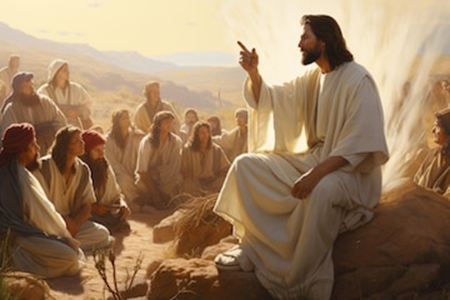
To reach every heart, Jesus spoke in a way that transcended education, culture, and status. One of His most powerful teaching methods was the parable, simple stories with eternal truths, designed to reveal the mysteries of the Kingdom of God to those willing to listen and understand.
🌾 What Are Parables, and Why Did Jesus Use Them?
Parables are simple stories with profound spiritual truths. Jesus used them to reveal the mysteries of the Kingdom of Heaven in a way that invited reflection. Even His own disciples were curious and asked, “Why do You speak to the people in parables?”
Jesus answered:
“Because the knowledge of the secrets of the kingdom of heaven has been given to you, but not to them. Whoever has will be given more, and they will have an abundance. Whoever does not have, even what they have, will be taken from them. This is why I speak to them in parables:‘Though seeing, they do not see;Though hearing, they do not hear or understand.’”
He continued by quoting the prophecy of Isaiah:
“You will be ever hearing but never understanding;You will be ever seeing but never perceiving.For this people’s hearts have become calloused;They hardly hear with their ears,and they have closed their eyes.Otherwise, they might see with their eyes,hear with their ears,understand with their hearts, and turn,and I would heal them.”
Then Jesus turned to His disciples and said:
“But blessed are your eyes because they see, and your ears because they hear. For truly I tell you, many prophets and righteous people longed to see what you see but did not see it, and to hear what you hear but did not hear it.”
💡 The Power of Parables Today
To those who read and reflect deeply on Jesus’ parables, you are blessed. God uses these stories to teach, challenge, and strengthen His faithful followers. The journey of true believers is often bitter with trials, but the lessons in these parables inspire, encourage, and empower us to endure.
Sadly, some claim Christianity without truly understanding it. They may be baptized only to gain church membership, but mere membership is not genuine faith. True belief requires transformation, not just affiliation.
So let us not just hear the parables, let us understand them, live by them, and let them shape our hearts. For in them lies the wisdom of Heaven, spoken by the One who walked among us.
Page 5 of 26
Gallery
God provided us a bridge to heaven
This bridge symbolizes our connection with Jesus
On the road again
This slideshow uses a JQuery script adapted from Pixedelic