
All Topics
Messages
- Details
- Written by: Messenger
- Category: Messages
The vision given to John in Revelation 13 is difficult to understand unless God Himself chooses to reveal its mystery. I thank God for using me as a vessel to share what He has shown. He instructed me to make these things known to all. Through the guidance of the Holy Spirit, I was given insight as we draw closer to the fulfillment of the prophecies that must take place before the return of Jesus. Everything that has been foretold must come to pass, and then the end will come. No one knows the exact day. Jesus said that even the Son of Man does not know, only the Father, who has appointed the time. Therefore, everyone must remain ready at all times.
Now I will share what God has taught me about this prophecy. Even John himself did not fully grasp its meaning; he was simply instructed to record what he saw. Afterward, he was taken up to heaven without experiencing death, fulfilling the promise Jesus had made to him. This is why Peter once questioned Jesus, many believed, especially the rest of the disciples, that John was especially beloved and would never die. Pointing to John, Peter asked, “Lord, is he not going to die?” Jesus answered, “If it is my will that he remain until I return, what is that to you? You follow me.” John recorded this himself in John 21:20–22.
Everyone knew John was the youngest among the disciples, likely still in his mid‑teens, perhaps sixteen or seventeen, and Jesus often brought him along wherever He went. John’s older brother James also tried to stay close behind. Jesus revealed many things to John, answering him whenever he sought understanding.
Some may wonder, “Does God show favoritism?” I have written about this before, but it is worth repeating: the apostle Paul said, “God does not show favoritism.” Yet God does grant special favor to certain individuals whom He chooses as prophets and messengers. These chosen ones were not given lives of luxury or ease. Their trials were immense, just so far beyond what words can fully describe. Still, God sustained them, delivered them, and prepared a secure place for them in heaven because they endured and remained faithful.
The real question is this: would you endure as those early Christians did, those who faced the flames, the sword, the arena, and the jaws of wild beasts? The first saints earned that title not through comfort or ease, but through a faith so unshakable that they lifted hymns to heaven even as Emperor Nero and other merciless rulers condemned them to die.
But what about you?
If you stood before the executioner’s blade, the instruments of torture, or the roaring lion, would praise still rise from your lips? Could you sing a hymn with death staring you in the face? Or would fear twist your voice into curses, bitterness, and denial?
Today, only a small remnant truly pauses to remember John the Baptist. He was executed by beheading, yet he received no grand memorial, no earthly honor—no crowds mourning his death, no officials offering tributes, no flowers, no donations, no eloquent speeches. And still, his faithfulness has outlived every monument this world could have built. John’s entire life was a trumpet in God’s hand, sounding the arrival of the Messiah. He understood his calling so deeply that he declared, “He must become greater; I must become less” (John 3:30).
And here lies the irony: though he died without honor, who today does not know his name? His legacy endures far beyond the reach of earthly applause. Jesus lived during John’s final days, and by earthly relation they were cousins—Mary, still a young teenager, visited her older cousin Elizabeth, who was already carrying John in her womb. Even before birth, John was set apart.
Yet John was not the only one whose faithfulness went uncelebrated. Consider the rest of the twelve disciples (excluding Judas Iscariot), or the great prophets, such as Daniel, Isaiah, Elijah, Jeremiah, and Elisha. Who builds monuments for them? Who pauses to thank them for their sacrifice, their courage, their unwavering devotion? Their names echo through Scripture, but the world rarely stops to honor them.
And even now, many preach the Word of God with mixed motives. As Paul wrote, “It is true that some preach Christ out of envy and rivalry, but others out of goodwill. The latter do so out of love, knowing that I am put here for the defense of the gospel. The former preaches Christ out of selfish ambition, not sincerely, supposing that they can stir up trouble for me while I am in chains. But what does it matter? The important thing is that in every way, whether from false motives or true, Christ is preached. And because of this, I rejoice.” (Philippians 1:15–18). Yet Paul rejoiced that Christ was preached regardless of motive. But Jesus Himself warned that not all who preach in His name truly belong to Him. “Many will say to me on that day, ‘Lord, Lord, did we not prophesy in your name…?’ Then I will tell them plainly, ‘I never knew you. Away from me, you evildoers’” (Matthew 7:22). Why? Their preaching was fueled by money, fame, and the hunger for applause, but not truly by love for God.
We do not want to walk that path. We do not want our service to be hollow, our devotion to be performance, our faith to be a stage. The examples of John, the prophets, and the apostles stand as a warning and a call: true faithfulness is rarely celebrated on earth, but it is always honored in heaven.
Remember also that Jesus was alive during John’s execution, yet He did not intervene to stop the beheading ordered by King Herod. This became a test of John’s own faith, a sober reminder that anyone who accepts the responsibility of serving God must be prepared to face severe trials—whether persecution, fire, or even death. Those who envy the calling of prophets should pause and consider honestly: could you endure such a fate? As mentioned earlier, Mary—likely around seventeen—had visited Elizabeth, who was six months pregnant with John, to share the astonishing news that God had chosen her to carry the Messiah. It had already been prophesied that John would be a prophet, and his birth fulfilled that prophecy. From the very beginning, even before he entered the world, John was anointed for this calling. He did not appoint himself, nor was he hired, sponsored, or elevated by human authority. It simply does not work that way. I will explore this in greater detail in another topic.
But above all, consider Jesus Himself. The Son of God, who gave His life on the cross for the world, received no public mourning, no grand procession, no lavish memorial. As He hung dying, only His mother Mary, Mary Magdalene, the apostle John, and a few devoted women stood at a distance to witness His final moments, while the rest of the disciples, those who once vowed loyalty, fled in fear. If even they shrank back in the hour of testing, how much more do we falter when life is no longer comfortable, when faith is challenged, when circumstances turn dark?
Even at Jesus’ burial, only two men dared to take His body down from the cross, while the rest of the disciples were nowhere to be found. Only Nicodemus and Joseph of Arimathea found the courage to remove His body and lay Him in a tomb. No crowds gathered to mourn. No wreaths were offered. No ceremony marked His death. The Savior of the world was laid to rest in silence and secrecy. Yet today, many seek to glorify their own works for fame and profit, using the words of God as a platform to make themselves known.
Now, returning to John’s vision in Revelation 13, I repeat these truths often because they are not easy to understand. I myself did not comprehend them until God granted me insight. I speak only as a humble messenger.
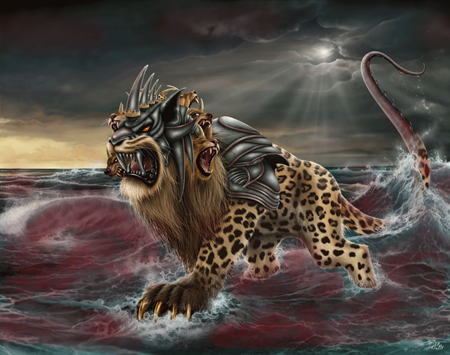
John wrote: “The beast I saw resembled a leopard, but had feet like those of a bear and a mouth like that of a lion. The dragon gave the beast his power and his throne and great authority. One of the heads of the beast seemed to have had a fatal wound, but the fatal wound had been healed. The whole world was filled with wonder and followed the beast. People worshiped the dragon because he had given authority to the beast, and they also worshiped the beast and asked, ‘Who is like the beast? Who can wage war against it?’”
In this vision, three animal features are emphasized: a leopard’s body, the feet of a bear, and the mouth of a lion. These symbolize major events within the larger prophecy. The leopard represents the Ottoman Empire because of its swift and relentless conquests. It expanded rapidly across the Middle East, much of Asia, and parts of Europe.
The beast’s feet, “like those of a bear,” symbolize the Ottoman Empire’s strength, ferocity, and capacity for forceful conquest, while the “lion’s mouth” reflects its fierce and intimidating power. The beast receiving authority from the dragon represents a symbolic granting of destructive influence. Each animal image contributes to the portrait: the bear’s claws signify raw power, the leopard suggests swift expansion, and the lion conveys dominant rule. Together, these symbols depict an empire that advanced rapidly, governed aggressively, and crushed resistance. John’s vision, interpreted through this imagery, points to the rise of the Ottoman Empire and its decisive role in the fall of the Byzantine Empire in 1453.
Historically, the Ottoman expansion unfolded through warfare, sieges, and the military practices typical of empires in that era. Many Christian communities were displaced, and numerous churches, especially throughout former Byzantine lands, were converted into mosques following the conquest. Traces of this history remain visible today in places like Istanbul’s Hagia Sophia or sites in Spain such as the Alhambra in Granada, which reflect earlier periods of Islamic rule on the Iberian Peninsula. I am grateful to God for allowing me to visit these places and witness their history firsthand. I have my own photographs, but the experience is far more powerful when you see it with your own eyes.
In the late 11th century, Western European Christians launched what became known as the Crusades, responding to centuries of Muslim territorial expansion. Their goals included halting the spread of Islam, reclaiming the Holy Land in the eastern Mediterranean, recovering formerly Christian regions, and converting or conquering pagan territories. Many who joined these campaigns viewed them as acts of penance and spiritual redemption.
In a symbolic interpretation, the “ten horns with ten crowns” are portrayed by God as blasphemous, representing the same barbarian rulers mentioned in John’s vision in Revelation 12—leaders who adopted Christianity and rose to power as monarchs, whether kings, queens, or princes. Although these monarchies professed loyalty to Christ, many were steeped in corruption, adultery, greed, brutality, immorality, and even incest, and their treatment of poor peasants was often too horrific to fully recount. For this reason, God condemns their practices and declares their claimed service to Him as blasphemy. Yet history books rarely speak plainly about their wickedness or the depth of their corruption. Likewise, many priests, despite their white robes, offered services that God Himself calls blasphemous and abhorrent, for their religious practices reflected the same abuses—corruption, irreverence, and dishonor toward the faith they claimed to uphold. Without tracing every historical detail, it is enough to note that as Byzantium declined, these Christian monarchies fought ruthlessly for dominance, even as the Ottoman Empire expanded and a new power—the Holy Roman Empire, ruled by the high priest known as the pope—rose rapidly in influence. This empire grew even stronger after the Byzantine Empire finally collapsed.
Within this framework, the imagery often associated with the Ottoman Empire—a leopard with the feet of a bear and the mouth of a lion—becomes, in this interpretation, a symbolic picture of its rise and power. Some preachers apply this imagery to Christian leadership, but in this view, John’s vision points instead to the emergence and expansion of Islam as a major world force. With this understanding, the symbolism becomes clearer, the mystery unveiled, and the meaning revealed.
I will now turn to the “little horn” that grew and became exceedingly blasphemous, was wounded, and later healed. In this interpretation, the little horn represents the unified influence of corrupt religious authorities within segments of the Christian church. This is difficult for many to accept because it does not point to an outside empire but instead exposes failures found within Christianity itself. According to this perspective, God intends to reveal and confront all the evil and blasphemous deeds committed under the guise of religious authority.
The rising influence of the Holy Roman Empire, once this mystery is fully revealed, will astonish many. I recognize that this may anger some readers, especially those whose religious loyalties are tied to the specific church being referenced.
I will address this in the fifth segment, as it marks the rise of another fierce and bitter persecution of Christians carried out by the blasphemous “little horn.” This is the same horn that rose and replaced three others in John’s vision.
- Details
- Written by: Messenger
- Category: Messages
All the disciples and the crowd have heard it many times on how Jesus referred to our last days. Jesus taught that the last days, our days today, would resemble three earlier periods in Scripture: the days of Noah, the days of the prophet Jonah, and the days of Sodom and Gomorrah. Jesus said “As it was in the days of Noah, so it will be at the coming of the Son of Man. For in the days before the flood, people were eating and drinking, marrying and giving in marriage, up to the day Noah entered the ark; and they knew nothing about what would happen until the flood came and took them all away. That is how it will be at the coming of the Son of Man. “(Matthew 24:37-39)
In the days of Noah, people were consumed with pleasure, amusement, and constant indulgence. Violence filled the earth, and moral restraint was cast aside. Sexual immorality was practiced without limit, as though nothing were forbidden. The corruption of humanity grieved the heart of God. The Lord saw how great the wickedness of the human race had become on the earth, and that every inclination of the thoughts of the human heart was only evil all the time. The Lord regretted that He had made human beings on the earth, and his heart was deeply troubled. So the Lord said, “I will wipe from the face of the earth the human race I have created, and with them the animals, the birds and the creatures that move along the ground—for I regret that I have made them.” (Genesis 6:5-8) But Noah found favor in the eyes of the Lord. Though God was prepared to bring judgment upon the entire earth, Noah stood as the one man who received grace—and if not for that grace, humanity would not exist today. He was not flawless, yet he was faithful, and God looked upon that faithfulness with divine favor.
In the days of Sodom and Gomorrah, wickedness had reached its peak—overflowing with immorality, lust, violence, and every form of corruption. Their evil was so great that God brought fire upon the cities and wiped them out. I will explore that account in greater detail in another topic. For now, let us turn our attention to the story of the prophet Jonah.
In the time of Jonah, God called the prophet to deliver a message of warning. But Jonah resisted his calling and fled, confessing that he did not want to proclaim judgment because he knew God to be merciful and forgiving. In essence, Jonah feared that if he warned the people, God would show compassion and spare them, leaving Jonah looking foolish in the eyes of those who heard him. This is what God told Jonah Amittai’s son: The word of the Lord came to Jonah, son of Amittai: “Go to the great city of Nineveh and preach against it, because its wickedness has come up before me.” (Jonah 1:1)
But Jonah ran away from the Lord and headed for Tarshish. In today’s language, he might have said, “Lord, I will look like a fool, a false prophet, if You show mercy after I proclaim destruction.” For Jonah, these wicked people don’t deserve salvation, as heaven is not for them. This was the reasoning Jonah offered before God.
He went down to Joppa, where he found a ship bound for that port. After paying the fare, he went aboard and sailed for Tarshish to flee from the Lord. Then the Lord sent a great wind on the sea, and such a violent storm arose that the ship threatened to break up. All the sailors were afraid and each cried out to his own god. And they threw the cargo into the sea to lighten the ship.
But Jonah had gone below deck, where he lay down and fell into a deep sleep. The captain went to him and said, “How can you sleep? Get up and call on your god! Maybe he will take notice of us so that we will not perish.”
Then the sailors said to each other, “Come, let us cast lots to find out who is responsible for this calamity.” They cast lots and the lot fell on Jonah. So they asked him, “Tell us, who is responsible for making all this trouble for us? What kind of work do you do? Where do you come from? What is your country? From what people are you?”
He answered, “I am a Hebrew and I worship the Lord, the God of heaven, who made the sea and the dry land.”
This terrified them and they asked, “What have you done?” (They knew he was running away from the Lord, because he had already told them so.)
The sea was getting rougher and rougher. So they asked him, “What should we do to you to make the sea calm down for us?”
“Pick me up and throw me into the sea,” he replied, “and it will become calm. I know that it is my fault that this great storm has come upon you.”
Instead, the men did their best to row back to land. But they could not, for the sea grew even wilder than before. 1 Then they cried out to the Lord, “Please, Lord, do not let us die for taking this man’s life. Do not hold us accountable for killing an innocent man, for you, Lord, have done as you pleased.” (Jonah 1:1-13) Then they took Jonah and threw him overboard, and the raging sea grew calm. At this, the men greatly feared the Lord, and they offered a sacrifice to the Lord and made vows to him.
Now the Lord provided a huge fish to swallow Jonah, and Jonah was in the belly of the fish three days and three nights. From inside the fish Jonah prayed to the Lord his God. So, while Jonah was inside the big fish, assumed a whale, he cried and prayed. Just think, who would ever still live after being swallowed by an animal? That’s a miracle. So, God commanded the whale to deliver Jonah to that same place and vomited him out. Then the Lord told prophet Jonah a second time: “Go to the great city of Nineveh and proclaim to it the message I give you.” (Jonah 3:1)
Jonah obeyed the word of the Lord and went to Nineveh. Now Nineveh was a very large city; it took three days to go through it. Jonah began by going a day’s journey into the city, proclaiming, “Forty more days and Nineveh will be overthrown.” The Ninevites believed in God. A fast was proclaimed, and all of them, from the greatest to the least, put on sackcloth. However, when God saw what they did and how they turned from their evil ways, he relented and did not bring on them the destruction he had threatened. But to Jonah, this seemed very wrong, and he became angry. He prayed to the Lord, “Isn’t this what I said, Lord, when I was still at home? That is what I tried to forestall by fleeing to Tarshish. I knew that you are a gracious and compassionate God, slow to anger and abounding in love, a God who relents from sending calamity. Now, Lord, take away my life, for it is better for me to die than to live.” But the Lord replied, “Is it right for you to be angry?” Jonah had gone out and sat down at a place east of the city. There he made himself a shelter, sat in its shade and waited to see what would happen to the city.
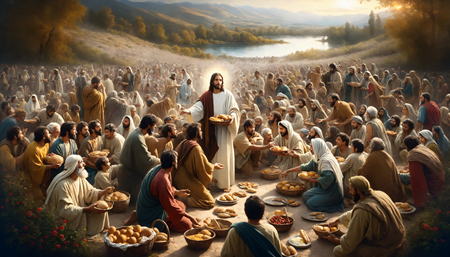
The twelve disciples struggled with these same feelings. When Jesus sent them out two by two to preach, they encountered others who were also preaching and casting out demons in Jesus’ name. They went back to Jesus and reported that they had tried to stop these believers because they weren’t part of the disciples’ group. John said, “Teacher, we saw someone driving out demons in your name and we told him to stop, because he was not one of us.”
Jesus replied, “Do not stop him. No one who performs a miracle in my name can soon afterward speak evil of me. Whoever is not against us is for us. And truly I tell you, anyone who gives you even a cup of water in my name because you belong to the Messiah will certainly not lose their reward.” (Mark 9:39)
God impressed on my heart to share this message. Before I ever began writing online, I used to think, “Well, they all deserve to perish in hell.” But the Holy Spirit gently whispered to me, “That is selfishness.”
This is what happened next to the prophet Jonah. He was furious. He sat under the scorching Middle Eastern sun, waiting, and hoping, for fire to fall from heaven and destroy Nineveh. The heat was unbearable, yet he stayed there, burning with anger and disappointment.
Then the Lord provided a leafy plant that grew up over Jonah, giving him shade and easing his discomfort. Jonah was delighted with the plant. But at dawn the next day, God sent a worm that chewed the plant, causing it to wither. When the sun rose, God sent a scorching east wind, and the sun beat down on Jonah’s head until he grew faint. In his misery, he said, “It would be better for me to die than to live.”
God asked him, “Is it right for you to be angry about the plant?”
“Yes,” Jonah replied. “I’m so angry I wish I were dead.”
But the Lord answered, “You are concerned about this plant, though you did not plant it or make it grow. It sprang up overnight and died overnight. And should I not be concerned for the great city of Nineveh, with more than a hundred and twenty thousand people who cannot tell their right hand from their left, and many animals as well?” (Jonah 4:10).
Do we ever catch ourselves feeling the same way? In moments of deep hurt or anger, we sometimes wish that those who wronged us would face judgment immediately. Before God revealed His mysteries to me through His prophecies and His words, I used to feel that way too.
But through the Holy Spirit, God revealed to me that those thoughts were rooted in selfishness. He called me to share the gospel, yet I hesitated, and God heard my doubts: “I’m not worthy, and I’m not old enough to preach like the preachers, ministers, or pastors. What could I possibly say online?”
Still, God placed His words in my mouth. And even now, He continues to reveal His abundant mercy. As long as the door of salvation remains open, His compassion is extended to all. We should thank Him daily for this mercy, because without His grace, that door could have closed long ago.
But a day is coming, once every prophecy has been fulfilled, when God’s wrath will be poured out, and probation will close. And let me warn you that moment is drawing near. Don’t wait until it’s too late or until death overtakes you. Jesus said that the world would end like this: “Immediately after the distress of those days:
“‘ The sun will be darkened,
and the moon will not give its light;
the stars will fall from the sky,
and the heavenly bodies will be shaken.’
Then will appear the sign of the Son of Man in heaven. And then all the peoples of the earth will mourn when they see the Son of Man coming on the clouds of heaven, with power and great glory. And he will send his angels with a loud trumpet call, and they will gather his elect from the four winds, from one end of the heavens to the other. ‘”(Matthew 24:29)
Therefore, the choice is yours. You can follow Jesus, turn away from your old ways, and walk the path that leads to eternal life. Or you can embrace the voices that pull you away from God’s truth. The call is simple: choose the way that leads to life, not the path that leads you astray.
- Details
- Written by: Messenger
- Category: Messages
During the earthly ministry of Jesus, His disciples enjoyed the privilege of walking closely with Him. They witnessed His miracles, experienced His protection, and never lacked their daily needs. Many of them hoped that Jesus would soon establish His kingdom and grant them places of honor beside His throne. As mentioned previously, even the mother of James and John approached Jesus, requesting that her sons be granted seats at His right and left hand in glory.
Jesus responded with grace and gentleness, reminding her that such positions are determined by the Father in Heaven. His answer did not rebuke her motherly concern for her sons, young John and James, who followed Jesus faithfully each day. Her desire to care for them is something many nurturing mothers, including my own, can easily understand.
Yet the deeper issue is not about position, honor, or proximity to the throne. The true question is one of loyalty to Jesus, regardless of where one may sit. Today, many believers associate following Christ with prestige, protection, comfort, or immediate blessings. But discipleship does not operate on such terms. Genuine loyalty is tested, refined, and proven—often through trials.
History bears witness to countless Christians who remained faithful even unto death—whether by sword, fire, beheading, or being thrown to wild beasts. Their steadfastness revealed the depth of their devotion. Could we demonstrate the same faith if placed under such pressure?
Even the twelve disciples struggled. Judas Iscariot betrayed Jesus for thirty pieces of silver. After Jesus was arrested, the remaining disciples fled in fear. Peter, who boldly vowed to lay down his life for Christ, fulfilled the prophecy spoken to him: “You will deny Me three times before the rooster crows.” Within a short span, Peter denied knowing Jesus at all.
If such devoted followers faltered, we must humbly acknowledge that we, too, are capable of failing. It is easy to listen to sermons about serving God, doing good works, giving tithes, and living righteously. But when trials arise, when fear, pressure, or temptation confront us, will we stand firm? Or will we be the first to run, hide, or deny the truth, even through careless words or actions?
True loyalty to Christ is not proven in comfort, but in testing. It is not measured by what we receive, but by how we remain faithful when everything is shaken.
As we prepare to enter another year, it is fitting to reflect on the many festivals and holidays that Christians observe. We must ask an important question: Are these celebrations truly appointed by God? As mentioned earlier, December 25th is not a date established in Scripture for celebrating the birth of Jesus. In fact, the only observance Jesus explicitly commanded His disciples to keep is the Last Supper. Yet even this sacred remembrance is often neglected or treated lightly, despite Jesus’ clear instruction to “do this in remembrance of Me.”
Jesus said, “Do this in remembrance of Me,” referring to the breaking of bread and the drinking of wine. He explained, “This is My body” and “This is My blood.” The bread symbolizes His body given for us, and the wine represents His blood shed for the forgiveness of sins. This act of remembrance is the most significant observance for believers, for it directs our hearts to His sacrificial death on the cross, our only path to salvation.
Another sacred observance appointed by God in Scripture is the Year of Atonement. The Lord commanded His people to keep it each year—a holy time set apart for repentance, reflection, and spiritual renewal. In many ways, this divine rhythm mirrors the transition from one year to the next. Although New Year celebrations are widely practiced today, they are seldom approached with the spiritual depth God intended.
The turning of the year should be a moment to seek God’s forgiveness, to lay aside old patterns, and to dedicate ourselves anew to righteous living. True renewal of the heart is the essence of the New Year, and it echoes the very purpose of the Year of Atonement. As God instructed Moses: “This is to be a lasting ordinance for you: Atonement is to be made once a year for all the sins of the Israelites.” (Leviticus 16:34).
Some preachers teach that we are saved by grace, and I agree that salvation begins with God’s grace alone. I have heard this message many times in church. However, this does not mean that salvation is automatically guaranteed from beginning to end, regardless of how we live. I do not believe this is what Jesus intended. If salvation were permanently secured without any responsibility on our part, why would Jesus command us to pray continually, to repent daily, and to remain watchful? If “once saved, always saved” meant we could persist in cheating, greed, hatred, foul speech, or any form of sin without consequence, then the call to holiness would be meaningless.
Such thinking would reduce the sacrifice of Christ to a mere formality rather than a call to transformation. It would make His death appear as something to be taken lightly. Even more concerning, some who preach humility do not model it in their own lives or homes. Their outward appearance or behavior may contradict the very virtues they proclaim. This inconsistency serves as a reminder that true discipleship is not about outward display but inward obedience.
The deeper truth remains: Christ’s death does not automatically save every person. Jesus taught that we must pray continually and repent sincerely for the sins we commit. If someone refuses to seek forgiveness and physical death overtakes them in that unrepentant state, they face eternal separation from God. Repentance is not a one-time event but a continual posture of the heart. Salvation is offered freely to all, but it must be embraced through faith, obedience, and a life marked by ongoing repentance.